
The Best Way to Treat Fatty Liver Before It Turns Serious
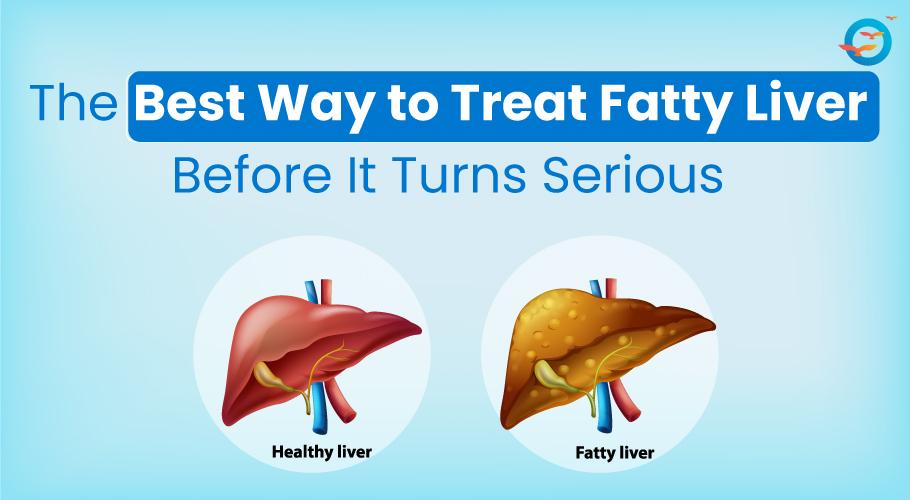
The Best Way to Treat Fatty Liver Before It Turns Serious
Fatty liver is one of the fastest-growing lifestyle health problems today. What makes it risky is not how quickly it progresses, but how quietly it develops. Many people live with fatty liver for years without pain or visible symptoms. By the time it is detected, the liver may already be under stress. The best way to treat fatty liver is to act early and correct the root causes before the condition becomes fibrotic or permanent.
Early fatty liver is reversible. With the right metabolic approach, the liver can heal itself naturally. Delaying action, however, can lead to long-term damage that is difficult to reverse.
Can Fatty Liver Be Detected Without a Scan?
Yes, fatty liver can be detected even without an ultrasound or sonography. A simple liver blood test can give early warning signs. One important indicator is the SGPT and SGOT ratio. When this ratio is greater than 1, it strongly suggests fat accumulation in the liver.
Many people wait for a scan before taking action, but that is not necessary. Blood reports are enough to begin lifestyle correction. Early intervention based on blood markers alone can prevent the condition from becoming serious.
Why Does Fat Accumulate in the Liver?
Fatty liver is not caused only by eating oily or fatty food. In Indian diets, excess carbohydrates play a major role. Foods like wheat, rice, roti, bread, and refined grains quickly convert into glucose. When the body does not need this glucose for energy, it gets converted into fat and is stored in the liver.
Another major contributor is excessive oil and ghee intake. Many households consume much more oil than required, often without realising it. Daily cooking, frying, snacks, and restaurant food together overload the liver over time.
The most important hidden reason is high insulin levels. Insulin is a hormone that pushes fat into storage. When insulin remains high throughout the day, the liver continuously stores fat. Unless insulin levels are brought down, fatty liver cannot improve effectively.
What Is the Best Way to Treat Fatty Liver Naturally?
The most effective way to treat fatty liver is a metabolic approach that focuses on food quantity, oil control, and insulin reduction. This approach works in stages and is sustainable when followed correctly.
How Does Reducing Carbohydrates Help Fatty Liver?
The first and most important step is reducing carbohydrate intake, especially grains. This does not mean starving or completely avoiding food. It simply means correcting quantity.
If you eat two chapatis, reduce it to one or one and a half. If your meal includes both rice and chapati, remove one of them. Instead, increase dal, vegetables, salads, and protein-rich foods. This reduces glucose overload and gives the liver a chance to clear stored fat.
Even within two months of controlled grain intake, many people see improvement in liver enzyme levels.
Why Is Oil and Ghee Control Important?
Most people consume around 5 to 8 teaspoons of oil or ghee per day without noticing. For fatty liver recovery, this amount needs to be reduced.
A safer intake during reversal is around 2 teaspoons per person per day. Avoid deep-fried foods, heavy gravies, repeated reheating of oil, and frequent outside food. This reduces fat load on the liver and improves digestion.
Oil control is a medium-term step, but it plays a strong role in long-term liver health.
What Is the Role of Insulin in Fatty Liver?
Insulin resistance is the main driver of fatty liver. Many people with fatty liver have fasting insulin levels of 10 or more. High insulin continuously signals the body to store fat in the liver.
Lowering insulin levels is essential for true reversal. This cannot be done only with medication. It requires correct food timing, balanced meals, and structured fasting done safely.
When insulin drops, the liver naturally releases stored fat and starts healing.
Does Fasting Help in Reversing Fatty Liver?
Yes, structured fasting helps significantly when done correctly. Fasting gives insulin levels time to fall, allowing the liver to unload fat stores. When fasting is supported with hydration, vegetable soups, and mineral balance, it does not cause weakness or irritation.
Unplanned or extreme fasting should be avoided. The goal is metabolic correction, not stress on the body.
Why Is Early Treatment of Fatty Liver So Important?
Fatty liver in its early stage is completely reversible. If ignored, it can progress to fibrotic liver or even cirrhosis, where recovery becomes very difficult.
Simple lifestyle changes done early are far more effective than late-stage medical management. Grain control, oil reduction, and insulin management together form the foundation of long-term liver recovery.
To understand more about early intervention and treatment, you can read this detailed guide:
https://www.freedomfromdiabetes.org/blog/post/fatty-liver-treatment-before-it-turns-serious/5120
by Freedom From Diabetes, which focuses on metabolic correction and lifestyle-based recovery.

 English
 Arabic
 French
 Spanish
 Portuguese
 Deutsch
 Turkish
 Italiano
 Russian
 Romaian
 Portuguese (Brazil)
 Greek
Greek