
Global Aircraft Floor Panel Market Analysis: Opportunities, Materials Innovation, and Competitive Landscape
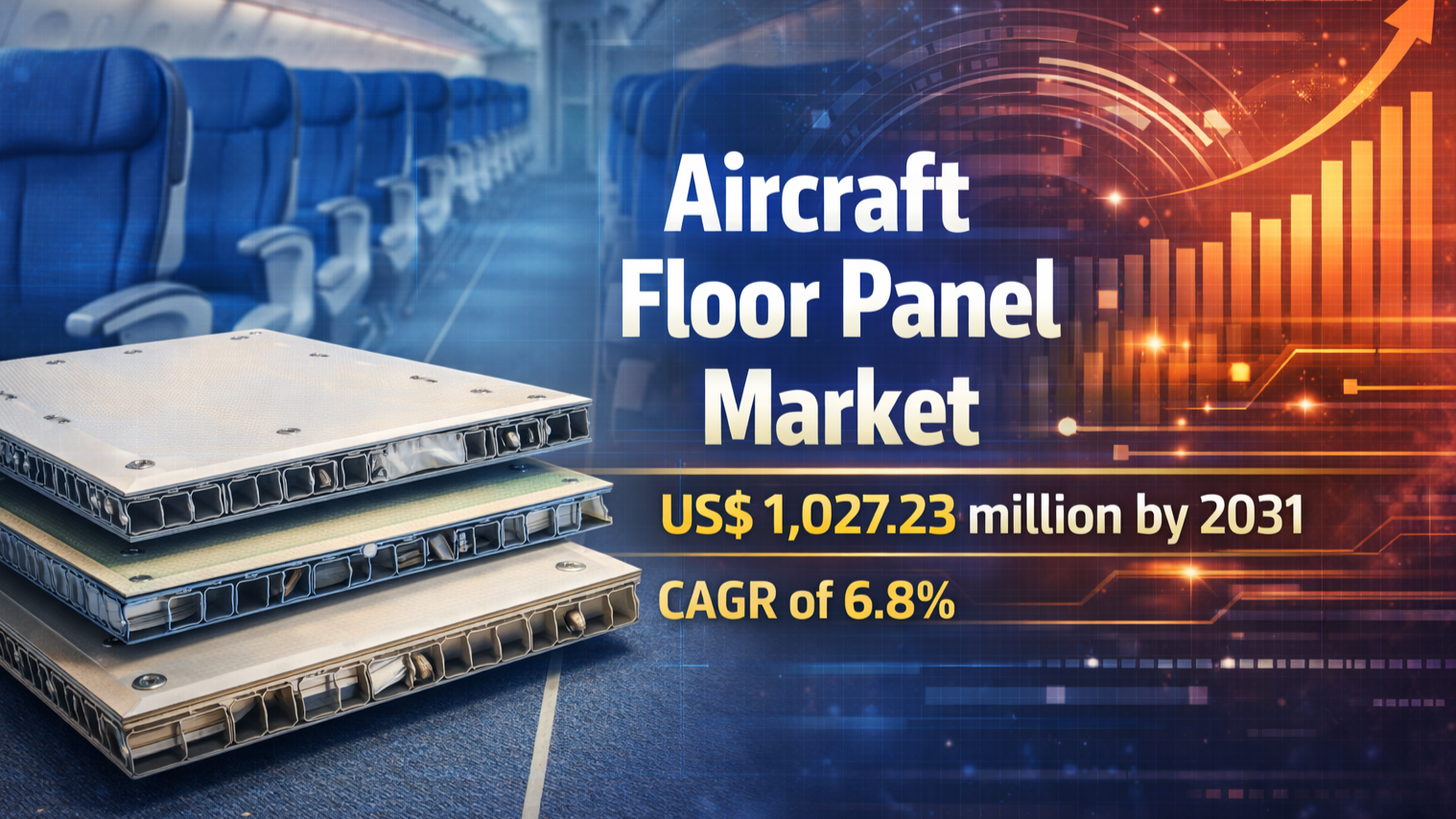
Commercial and military aircraft rely on floor panels as key structural parts, engineered as lightweight sandwich composites. These panels use glass or carbon fiber epoxy face sheets reinforced with fibers, laminated to aramid or aluminum honeycomb cores for unmatched strength-to-weight efficiency, stiffness, and shear resistance.
Aircraft Floor Panel Market Market Overview and Growth Trajectory
The Aircraft Floor Panel Market is projected to grow from approximately US$ 649.35 million in 2024 to US$ 1,027.23 million by 2031, registering a CAGR of around 6.8% during the forecast period. Growth is strongly linked to increasing narrow-body aircraft production, particularly from major OEMs such as Airbus and Boeing. Narrow-body aircraft dominate new deliveries due to their suitability for short- and medium-haul routes, leading to higher demand for floor panels at both the OEM and aftermarket levels.
The global market is experiencing steady growth, driven by the expanding commercial aviation sector, increasing aircraft production rates, and rising maintenance, repair, and overhaul (MRO) activities worldwide. Aircraft floor panels play a critical structural and functional role in cabin interiors, supporting passenger movement, seating, galleys, and cargo while contributing to overall aircraft weight efficiency and safety compliance. As airlines and military operators prioritize lightweight materials and cabin modernization, demand for advanced floor panel solutions continues to rise.
Material Innovation and Sustainability Trends
Material innovation is a defining trend in the aircraft floor panel market. Nomex honeycomb panels are gaining higher adoption compared to traditional aluminum honeycomb due to their superior strength-to-weight ratio, fire resistance, and durability. The aviation industry’s broader push toward lightweighting directly supports fuel efficiency goals and emission reduction targets. Additionally, sustainability considerations are shaping product development, with manufacturers increasingly investing in recyclable composites and eco-friendly manufacturing processes.
Role of MRO and Retrofitting Activities
Another major growth driver is the expansion of global MRO activities, particularly in emerging economies across Asia Pacific. Airlines are focusing on extending the operational life of existing fleets through retrofitting and cabin refurbishment programs. This trend significantly boosts aftermarket demand for aircraft floor panels, especially as cabin upgrades prioritize passenger comfort, safety compliance, and modern interior layouts. The increasing number of general aviation aircraft and helicopters also contributes to consistent demand from regional operators and business aviation customers.
Aircraft Floor Panel Market Challenges and Supply Chain Constraints
Despite strong growth fundamentals, the market faces challenges related to supply chain disruptions and geopolitical uncertainties, which can affect the availability of raw materials such as aluminum alloys and composite fibers. Fluctuations in material prices and logistics constraints may impact production timelines and cost structures for manufacturers. However, the integration of digital simulation tools in product design and testing is improving development cycles and reducing time-to-market, creating competitive advantages for technologically advanced suppliers.
Download Sample PDF- https://www.theinsightpartners.com/sample/TIPRE00006437
Regional Market Dynamics and Growth Hotspots
Regionally, North America holds the largest share of the aircraft floor panel market, supported by a large operational fleet and a mature MRO ecosystem. Europe follows closely, driven by aircraft manufacturing and component innovation. Asia Pacific is expected to register the fastest growth rate during the forecast period, fueled by rapid aviation infrastructure development, rising air travel demand, and significant investments in MRO facilities. The increasing number of aircraft deliveries in countries such as China and India is further strengthening regional demand for aircraft floor panels.
Key Players in the Aircraft Floor Panel Market
- Collins Aerospace – Strong portfolio in aircraft interior systems and structural components
- Safran SA – Advanced materials and cabin systems with global MRO presence
- Triumph Group Inc – Structural assemblies and composite solutions for OEMs
- Latecoere SA – Specializes in aerostructures and composite components
- The Gill Corporation – Lightweight composite sandwich panels for cargo and cabin flooring
- The NORDAM Group LLC – Aircraft interior and structural component manufacturing
- Singapore Technologies Engineering Ltd – Integrated aerospace engineering and MRO capabilities
- Jones Metal Products – Precision-fabricated aircraft interior structures
Future Outlook
The future of the aircraft floor panel market will be shaped by sustainability initiatives, digital manufacturing adoption, and continued fleet modernization. OEMs and MRO providers are expected to prioritize lightweight, recyclable, and high-durability materials to support fuel efficiency and carbon reduction goals. The use of digital simulation, predictive maintenance, and automation in composite manufacturing will streamline production cycles and enhance product reliability. Additionally, strong aircraft demand in Asia Pacific and the Middle East, coupled with ongoing retrofitting of aging fleets worldwide, will sustain long-term growth opportunities for aircraft floor panel manufacturers.
Other Reports-

 English
 Arabic
 French
 Spanish
 Portuguese
 Deutsch
 Dutch
Dutch
 Italiano
 Russian
 Romaian
 Portuguese (Brazil)
 Greek
Greek