
Jaggery vs Sugar vs Stevia: What’s Best for Diabetes?
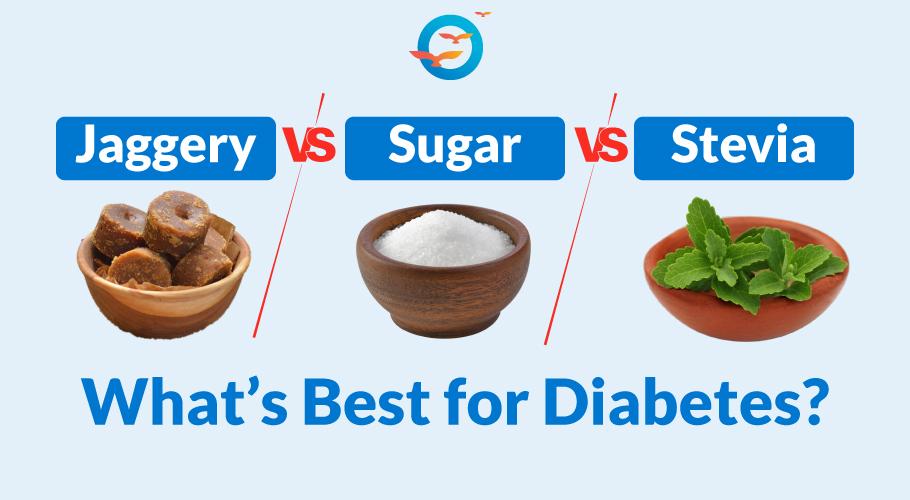
Jaggery vs Sugar vs Stevia: What Is the Right Sweetener Choice for Diabetes?
Living with diabetes often means becoming more mindful about everyday food choices, especially sweetness. Whether it is morning tea, coffee, or occasional desserts, sweeteners can have a direct and immediate impact on blood sugar levels. Many people wonder which option is safer for diabetes management: jaggery, sugar, or stevia. Although jaggery is often considered natural and stevia is marketed as diabetes-friendly, the truth lies in understanding how each affects the body. Let us explore the differences based on glycemic impact, nutrition, and long-term health.
Why Sweetener Choice Matters in Diabetes
For people with diabetes, blood sugar stability is more important than taste alone. Any food or ingredient that causes rapid glucose spikes can make diabetes control difficult and increase the risk of complications. Sweeteners play a significant role because they are frequently consumed, sometimes without awareness, in beverages and packaged foods. Choosing the wrong sweetener repeatedly can slow progress in diabetes management or reversal efforts.
Refined Sugar and Its Effect on Blood Sugar
Refined white sugar is the most commonly used sweetener worldwide, but it is also the most problematic for diabetes. Sugar has a high glycemic index of around 65, which means it raises blood glucose levels quickly after consumption. It provides calories without any meaningful nutrients and contributes to weight gain, insulin resistance, and poor glucose control over time. According to diabetes experts and health organizations, regular sugar intake offers no benefit for people trying to manage or reverse type 2 diabetes. Even small daily amounts can add up and negatively affect long-term outcomes.
Is Jaggery Really a Healthier Alternative to Sugar?
Jaggery, also known as gur, is often promoted as a healthier or more natural alternative to white sugar. While it is less refined and contains trace minerals such as iron, magnesium, and potassium, its effect on blood sugar remains a concern for people with diabetes. Jaggery has a glycemic index ranging between 70 and 80, which is sometimes even higher than refined sugar. This means it can cause sharper glucose spikes despite its natural image.
Many people believe black jaggery or organic jaggery is safer, but from a blood sugar perspective, these forms behave similarly in the body. The small mineral content does not offset the glucose rise caused by jaggery. For diabetes patients, regular use of jaggery can be just as harmful as sugar, especially when used in tea, sweets, or daily cooking.
Why Stevia Is Considered the Best Sweetener for Diabetics
Stevia stands out as the most diabetes-friendly option among the three. Derived from the leaves of the Stevia rebaudiana plant, stevia is a natural, non-caloric sweetener with a glycemic index of zero. This means it does not raise blood sugar levels at all. Stevia has been approved by global health authorities such as the U.S. Food and Drug Administration and recognized as safe by the World Health Organization.
One of the biggest advantages of stevia is that it satisfies sweetness cravings without adding calories or affecting insulin levels. It can be used in tea, coffee, and even some cooking preparations. When consumed in moderation and in its natural form, stevia supports better glucose control and weight management, both of which are crucial for diabetes care.
Comparing Sugar, Jaggery, and Stevia for Diabetes Health
When comparing all three sweeteners side by side, sugar ranks as the least suitable option due to its rapid glucose spikes and lack of nutrition. Jaggery, while slightly better in mineral content, still behaves like sugar in terms of blood sugar response and is not recommended for regular use in diabetes. Stevia emerges as the safest choice because it does not disturb glucose levels and helps reduce overall calorie intake. For anyone aiming for better diabetes control or reversal, stevia is clearly the most sensible option.
How to Reduce Sweet Cravings Safely
Managing sweetness is not just about replacing sugar with stevia; it is also about gradually retraining taste buds. Reducing the frequency of sweetened beverages such as tea, coffee, and milk can make a significant difference over time. Choosing natural stevia extracts instead of blends that contain artificial sweeteners or fillers is important for safety and effectiveness. As sweetness intake reduces slowly, most people find that their craving for sugar naturally decreases. Being mindful of hidden sugars in packaged foods is equally important, as products labeled with jaggery or natural sweeteners can still cause glucose spikes.
What Is the Healthiest Sugar Substitute for Diabetes?
The healthiest sugar substitute for diabetes is one that supports stable blood sugar levels while allowing occasional sweetness without guilt. Stevia fits this requirement best when combined with a balanced, low-glycemic diet rich in fiber, proteins, and whole foods. While jaggery and sugar are best avoided in daily use, stevia offers a practical and safer alternative. Health organizations like the American Diabetes Association and the World Health Organization consistently support low- or zero-calorie sweeteners like stevia for diabetes management when used wisely.
Frequently Asked Questions About Sweeteners and Diabetes
Many people ask whether jaggery is better than sugar for diabetes, and the answer remains no due to its high glycemic index. Some wonder if jaggery can be eaten occasionally, which may be possible in very small quantities, but it is not recommended as a regular habit. Stevia is widely considered safe for daily use when it is natural and consumed in moderation. Among sugar substitutes, stevia, monk fruit, and erythritol are considered better choices than sugar or jaggery. Stevia also supports blood sugar control because it does not increase glucose levels at all.
Read more about this, visit our blog.
https://www.freedomfromdiabetes.org/blog/post/jaggery-vs-sugar-vs-stevia-for-diabetes/4819

 English
 Arabic
 French
 Spanish
 Portuguese
 Deutsch
 Turkish
 Dutch
Dutch
 Italiano
 Russian
 Romaian
 Portuguese (Brazil)