
Knapsack Mist Blower: Power and Reach in One Package
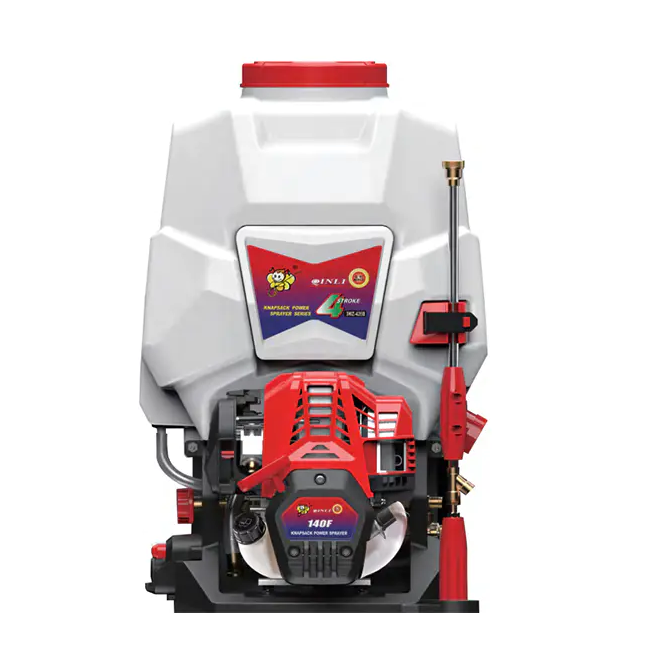
A knapsack mist blower is one of those pieces of agricultural and pest control equipment that earns its reputation through consistent field performance rather than product marketing. Worn on the operator's back and powered by a two-stroke or four-stroke engine, the knapsack mist blower generates a high-velocity airstream that carries chemical solution in fine droplet form across a coverage radius that hand-pump sprayers simply cannot match. For farmers, pest control operators, and plantation managers working across large areas, that combination of mobility and reach defines the product's value.
Engine displacement and output are the starting point for any knapsack mist blower evaluation. Units in the 25cc to 35cc displacement range handle general agricultural spraying — orchards, vegetable crops, small plantation rows — at airflow rates sufficient for adequate droplet penetration into dense canopy. Larger displacement engines in the 40cc to 52cc range produce higher air velocity and greater blowing distance, making them better suited to tall tree crops, wide-row plantation applications, and disinfection work in poultry or livestock facilities where thorough coverage across large enclosed spaces is required. Buyers sourcing knapsack mist blowers for distribution should map engine specification against the primary use cases their customers face.
Tank capacity shapes how long an operator can work between refills. Knapsack mist blower tanks typically range from 10 liters to 20 liters, with the larger capacity models adding weight that affects operator comfort during extended use. The balance between tank volume and loaded weight is a practical ergonomic consideration — a 20-liter tank filled with solution can weigh 20 kilograms before the machine weight is added, which limits how long most operators can work comfortably without fatigue affecting application consistency. Padded harness systems with hip belt load transfer help distribute that weight more effectively, and buyers evaluating knapsack mist blowers for professional use contexts should treat harness quality as a functional specification rather than a comfort accessory.
Airflow volume and velocity — typically expressed as cubic meters per minute and meters per second respectively — determine how effectively the knapsack mist blower carries droplets to their target. Higher air velocity extends throw distance and improves penetration into dense foliage, but also increases the risk of droplet drift under windy conditions. Nozzle design and the relationship between airflow speed and liquid flow rate at the nozzle determines the droplet size spectrum produced — finer droplets cover surface area more efficiently but drift more easily, while coarser droplets carry better in wind but may not penetrate canopy as thoroughly.

 English
 Arabic
 French
 Spanish
 Portuguese
 Deutsch
 Turkish
 Dutch
Dutch
 Russian
 Romaian
 Portuguese (Brazil)
 Greek
Greek