
Float Ball Performance Optimization Methods with Yaokangvalve
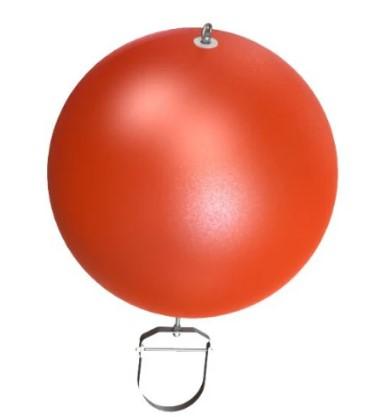
In industrial liquid-handling systems, a Float Ball helps maintain stable level regulation, and a carefully balanced Float Ball can improve operational reliability under changing working conditions. Although this component appears simple, it has a direct influence on flow stability, automated response accuracy, and equipment protection in storage tanks, pipelines, and process-control applications used throughout modern industries.
1. Environmental Conditions and System Requirements
Every industrial environment presents different operational challenges. Temperature fluctuations, pressure variation, liquid density, and chemical exposure all affect how a buoyant mechanism performs during continuous service. A component that functions efficiently in one system may become unstable in another if the surrounding conditions are significantly different.
Engineers often begin by examining how rapidly liquid levels change and how frequently the mechanism cycles during operation. These observations help determine the ideal structural thickness, movement tolerance, and material durability needed for long-term efficiency. Environmental analysis is important because even small differences in pressure or fluid composition can influence movement precision over time. Careful preparation therefore reduces the possibility of unexpected equipment failure and operational interruptions.
2. Structural Design and Motion Stability
The geometry of a floating mechanism strongly affects movement accuracy. If the structure is too large for the chamber, friction may slow its response and create unnecessary mechanical stress. If it is too small, unstable positioning may develop when liquid levels fluctuate rapidly. Correct dimensional balance allows smoother operation and improves liquid-level regulation throughout repeated operating cycles.
Weight distribution also contributes to overall system stability. A balanced internal structure minimizes vibration and reduces wear on nearby valves, seals, and piping systems. Stable motion becomes especially important in automated facilities where continuous operation requires consistent response timing. By improving structural balance, industrial systems can maintain greater efficiency while reducing maintenance demands over long service periods.
3. Yaokangvalve Engineering Concepts for Reliability
Long-term durability depends on more than material strength alone. Yaokangvalve emphasizes corrosion-resistant construction, precision manufacturing tolerances, and smooth surface treatment to improve reliability in demanding industrial environments. These engineering details reduce movement resistance and help maintain stable operation during continuous use.
Attention to sealing compatibility and dimensional accuracy also supports operational consistency. A properly engineered floating mechanism should continue functioning effectively despite vibration, temperature changes, and pressure variation. By combining durable materials with balanced structural design, the overall control system becomes more reliable and easier to maintain. This engineering approach helps reduce unexpected downtime while supporting efficient industrial production across different applications.
4. Installation Practices That Improve Performance
Correct installation is essential for maintaining efficient operation. Even a high-quality component may underperform if alignment or chamber spacing is incorrect. The buoyant mechanism must move freely without excessive clearance that could create unstable movement during operation. Proper positioning improves response accuracy and allows the control system to react naturally to changing liquid levels.
Post-installation testing is equally important. Engineers should monitor the mechanism during actual operating cycles to confirm smooth movement and accurate response timing. If delayed motion, vibration, or sticking occurs, adjustments should be completed immediately. Early corrections prevent additional mechanical stress and reduce the possibility of long-term operational problems. Careful installation practices therefore contribute directly to greater equipment lifespan and system efficiency.
5. Maintenance Strategies for Long-Term Operation
Routine maintenance is critical for preserving operational stability in industrial environments. Cleaning internal chambers prevents residue accumulation that may interfere with movement, while regular inspections identify wear before serious damage develops. Replacing aging parts on schedule minimizes downtime and improves overall equipment reliability.
Maintenance schedules should always reflect actual working conditions rather than general assumptions. Systems exposed to aggressive chemicals, high operating temperatures, or constant cycling may require more frequent inspections than standard applications. Flexible maintenance planning helps maintain movement precision and supports longer equipment life. Companies interested in additional technical information and product specifications can review the official resources available at https://www.yaokangvalve.com .

 English
 Arabic
 French
 Spanish
 Portuguese
 Deutsch
 Turkish
 Dutch
 Russian
 Romaian
 Portuguese (Brazil)
 Greek