
Why Does Cooling Design Matter in a Bucket Mold?
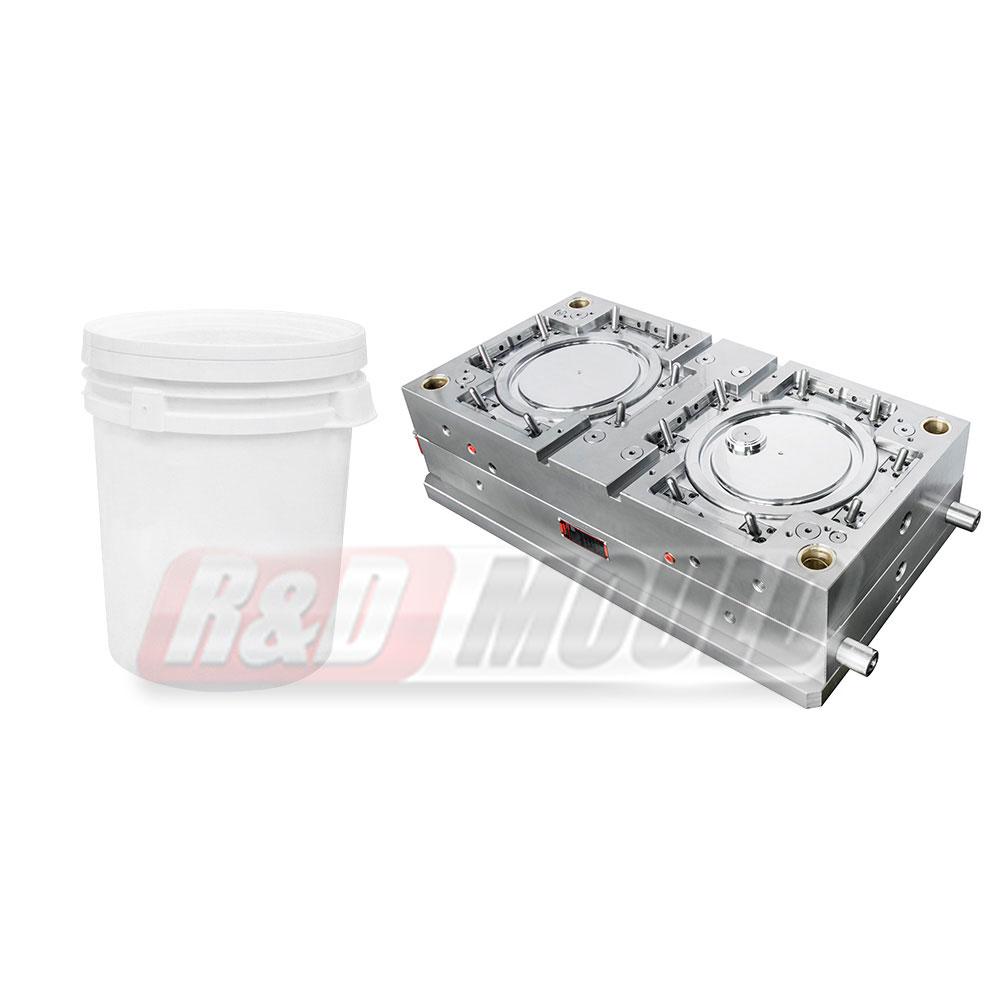
Plastic buckets are widely used for paint, chemicals, and packaging. Behind every bucket product is a carefully engineered Bucket Mold. The mold structure, cooling layout, and machining accuracy all influence how the bucket is formed during injection molding.
Companies searching for Bucket Mold Manufacturers usually focus on stable production and consistent bucket appearance. Paint bucket molds often run for large quantities, so the design stage becomes a key part of the project. A well-planned Bucket Mold supports steady molding cycles and uniform wall thickness.
Factories with experience in container molds often produce paint bucket molds ranging from small-capacity containers to larger industrial pails. During years of mold production, Bucket Mold Manufacturers have developed practical approaches to improve mold structure and production stability.
Cooling system design shapes the molding cycle.
Cooling design is one of the central elements in a Bucket Mold. Plastic buckets typically have thick walls compared with thin packaging containers, which means heat removal requires careful planning.
For many bucket molds, cooling channels are arranged inside the core, cavity, sliders, and stripper systems. In paint pail molds, engineers often place the cooling channel about 15 mm below the molding surface of the core. Cooling channel diameters are commonly designed above 12 mm so water can circulate smoothly while removing heat.
The cooling system around the hot runner tip area inside the cavity also requires attention. This section reacts quickly to temperature changes. When the cooling distribution is not balanced, the cycle time and bucket appearance may change. Because of this, experienced Bucket Mold Manufacturers spend time reviewing cooling paths during the design stage.
Steel selection affects long production runs.
Another topic buyers often discuss with Bucket Mold Manufacturers is mold steel selection. Bucket molds used in packaging production usually operate for large production quantities.
For molds expected to produce around one million cycles, cavity and core components are often produced with steel such as 2738 with a hardness around HRC35–38. When the project requires longer production periods, some mold makers choose steel like 2344 with hardness around HRC45–48.
In certain designs where faster cooling is desired, inserts made from beryllium copper may be used at the core top, cavity bottom, or slider areas. These inserts help transfer heat more quickly inside the Bucket Mold.
Precision machining keeps bucket walls consistent.
Machining accuracy directly influences the structure of a Bucket Mold. One common challenge in paint bucket molds is core eccentricity. When the core is not aligned precisely, the bucket wall thickness becomes uneven, and the bucket may appear off-center.
To reduce this risk, mold makers use precision tooling equipment and careful assembly procedures. Accurate machining allows the cavity and core to align correctly during injection molding.
Because bucket products often require repeated cycles over long production periods, many Bucket Mold Manufacturers focus on machining stability and component alignment. These steps support consistent molding performance and maintain the shape of plastic buckets during large production runs.

 English
 Arabic
 Spanish
 Portuguese
 Deutsch
 Turkish
 Dutch
Dutch
 Italiano
 Russian
 Romaian
 Portuguese (Brazil)
 Greek
Greek