
Industrial Automation Market 2030: Trends, Growth Drivers, and Future Opportunities
Industrial automation involves the use of advanced technologies, including robots, computers, programmable logic controllers (PLCs), and specialized software, to control machinery and industrial processes with minimal human intervention. By automating repetitive tasks, improving precision, and reducing human error, industrial automation is transforming the manufacturing landscape across industries such as automotive, oil & gas, electronics, and chemicals.
Industrial Automation Market Size and Growth
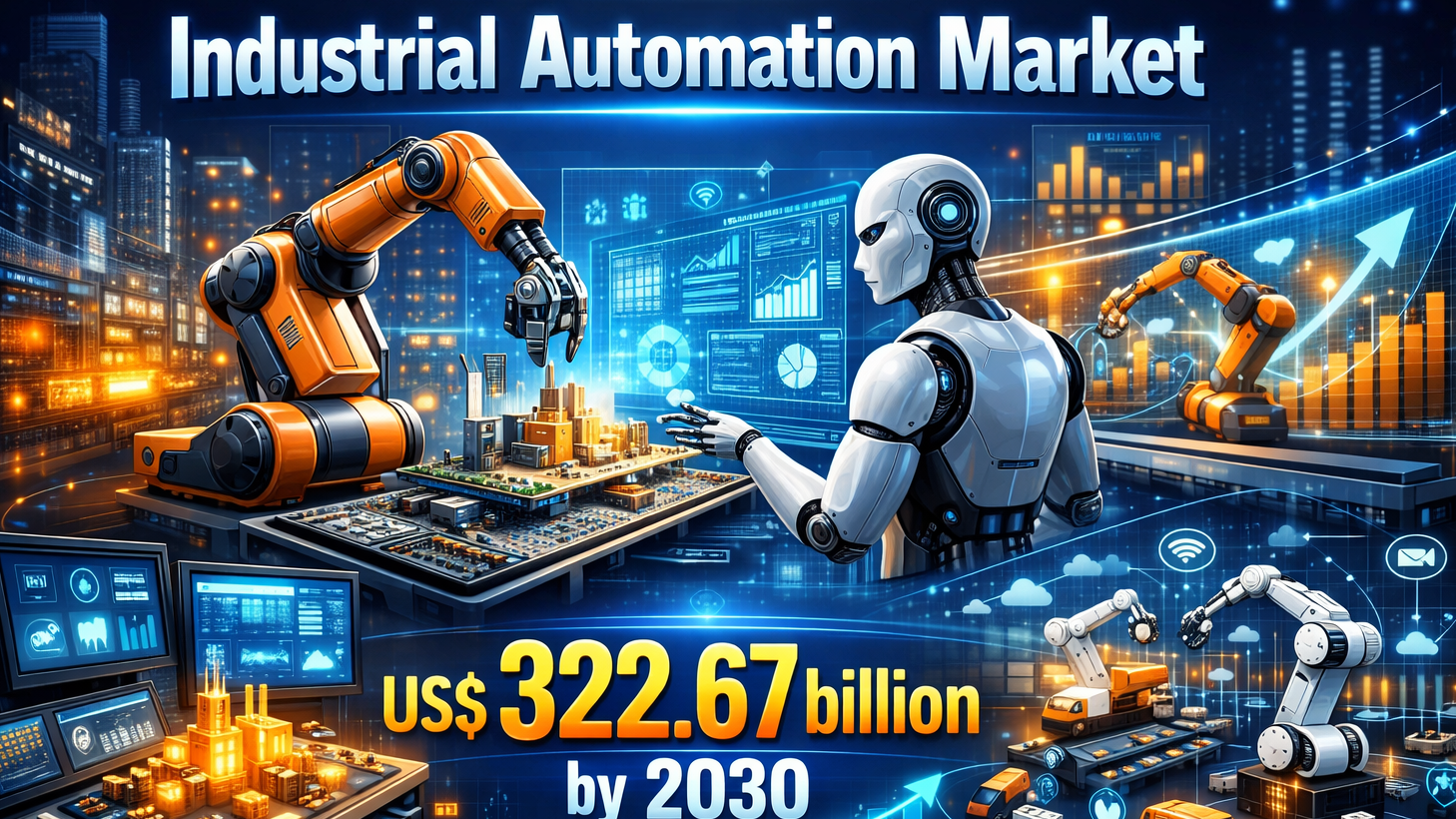
The global industrial automation market is experiencing robust growth, driven by technological innovations and the growing adoption of Industry 4.0 practices. The market is projected to grow from US$ 171.23 billion in 2022 to US$ 322.67 billion by 2030, achieving a CAGR of 8.2% between 2023 and 2030. This growth is supported by the increasing integration of Information Technology (IT) and Operational Technology (OT), which enables manufacturers to gain deeper operational insights, optimize production processes, and enhance efficiency.
Technological Trends Driving Market Expansion
The proliferation of Industrial Internet of Things (IIoT) devices, connected sensors, and AI-driven analytics is generating vast amounts of real-time data, which can be leveraged for predictive maintenance, process optimization, and anomaly detection. Additionally, governments globally are promoting automation to enhance productivity, workplace safety, and operational efficiency. National initiatives like Germany’s Industry 4.0, China’s Made in China 2025, and India’s Make in India are encouraging manufacturers to invest in advanced automation technologies.
Role of Machine Vision and Customization
Machine vision systems powered by deep learning are becoming increasingly important in quality inspection and defect detection. These systems are widely applied in sectors like electronics, automotive, and food & beverages. Furthermore, rising consumer demand for high-quality, personalized products delivered quickly is driving manufacturers to adopt scalable, automated solutions that improve responsiveness, flexibility, and competitiveness.
Key Benefits of Industrial Automation
Industrial automation enables businesses to reduce human intervention while increasing operational efficiency, accuracy, and consistency. Automation systems are typically divided into process plant automation and manufacturing automation, both aimed at improving product quality, reducing costs, and enhancing reliability. Industries such as oil & gas, chemicals, pharmaceuticals, and automotive benefit significantly from automation due to its ability to improve productivity, safety, and energy efficiency.
Download PDF Copy- https://www.theinsightpartners.com/sample/TIPRE00025985
Market Drivers
- AI and Machine Learning Integration: Enables intelligent decision-making, predictive analytics, and autonomous operations, reducing downtime and operational costs.
- Virtual and Augmented Reality (VR/AR): Enhances workforce training, facilitates remote collaboration, and minimizes errors during maintenance and assembly.
- Industrial IoT and Smart Sensors: Provides real-time monitoring, fault detection, and data-driven maintenance planning, improving efficiency and reducing operational costs.
Market Segmentation
- By Component: Hardware and Software (Hardware accounted for the largest share in 2022).
- By System: Supervisory Control and Data Acquisition (SCADA), Distributed Control System (DCS), Programmable Logic Control (PLC), and Others (SCADA projected to grow rapidly).
- By End User: Oil & Gas, Automotive, Food & Beverages, Chemical & Materials, Aerospace & Defense, and Others (Oil & Gas held the dominant share in 2022).
Regional Insights
The Asia Pacific region is expected to lead global growth, supported by the presence of major industrial automation companies such as Omron, Mitsubishi Electric, and Hitachi. Rapid industrialization, technological adoption, and government incentives are key growth factors. North America, Europe, Middle East & Africa, and South & Central America are also witnessing steady growth due to modernization initiatives and rising demand for automation solutions.
Leading Players in the Market
- ABB Ltd.
- Bosch Rexroth AG
- Emerson Electric Co.
- Hitachi Ltd.
- Honeywell International, Inc.
- Mitsubishi Electric Corporation
- Omron Corporation
- Rockwell Automation, Inc.
- Schneider Electric SE
- Siemens AG
Recent Market Developments
In 2023, Emerson Electric acquired National Instruments for US$ 8.2 billion to expand its automation software capabilities. Similarly, ABB India secured a project for the automation of ArcelorMittal Nippon Steel India’s cold rolling mill, aiming to improve energy efficiency and operational performance. These strategic developments highlight the increasing demand for advanced and integrated automation solutions globally.
Future Outlook
The industrial automation market is expected to continue its strong growth trajectory through 2030. The adoption of AI, robotics, IIoT, and immersive technologies will lead to smarter, self-optimizing manufacturing systems. Sustainability, cost optimization, and energy efficiency will remain key drivers, while scalable, flexible automation solutions will become increasingly critical for industries seeking to maintain competitiveness in complex, global markets.
Related Reports-

 English
 Arabic
 French
 Spanish
 Portuguese
 Deutsch
 Turkish
 Dutch
Dutch
 Russian
 Romaian
 Portuguese (Brazil)
 Greek
Greek