
Understanding Button Feeder Compatibility in Garment Production
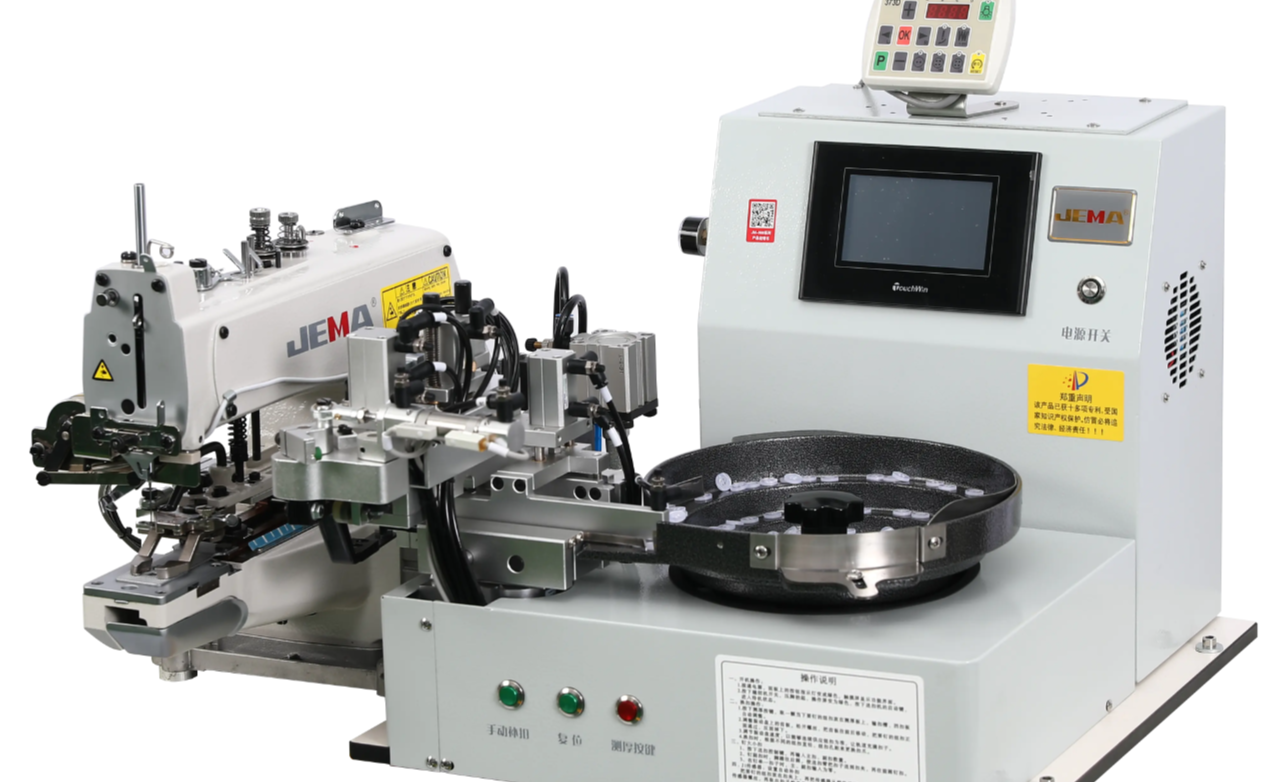
The Importance of Machine Compatibility in Button Feeding
In modern garment manufacturing, automation plays a vital role in improving productivity and consistency. One common concern for factories considering automation is whether a Ball Button Feeder can be used with different brands of button attaching machines or sewing machines. Since production lines often include equipment from multiple manufacturers, compatibility becomes a key factor in investment decisions. Understanding how feeder systems interact with various machines helps manufacturers avoid costly mismatches and operational disruptions.
How Ball Button Feeding Systems Interface with Sewing Equipment
Button feeding systems are designed to deliver buttons accurately and consistently to the sewing or attaching point. Compatibility depends largely on how the feeder communicates mechanically and electronically with the host machine. Many feeders rely on standardized mounting structures, signal triggers, and timing mechanisms that allow them to work alongside a range of button-attaching machines. When these interface elements are flexible, integration across different brands becomes more feasible.
Mechanical Compatibility Considerations
From a mechanical perspective, compatibility is influenced by factors such as mounting brackets, feeder orientation, and button delivery paths. Sewing machines and button attaching machines from different brands may vary in size, layout, and working height. Well-designed feeders often include adjustable mounting options that allow alignment with various machine frames. These adjustments make it possible to integrate a feeder without extensive structural modification, even when machine designs differ between manufacturers.
Electrical and Control System Integration
Beyond physical mounting, electrical compatibility plays a critical role. Button feeders often rely on signals from the sewing machine to synchronize button delivery with the stitching cycle. Different brands may use different control systems, voltage standards, or signal protocols. Feeders designed with adaptable control interfaces or external controllers can accommodate these variations more easily. In some cases, minor electrical adjustments or signal converters allow seamless communication between the feeder and the sewing machine.
Adaptability Across Button Attaching Machines
Button attaching machines are not all built for the same button types or sewing processes. Some are designed specifically for flat buttons, while others handle shank or ball buttons. A feeder intended for ball buttons must align precisely with the attaching mechanism to ensure accurate placement. Compatibility is highest when the feeder is engineered to work with common button attaching standards rather than a single proprietary design. This adaptability allows manufacturers to use the feeder across multiple production lines equipped with different brands.
Brand-Specific Limitations and Customization Needs
Despite advances in standardization, not all machines are equally compatible. Some sewing machine brands use proprietary designs that limit third-party feeder integration. In these cases, customization may be required to ensure proper alignment, timing, and signal communication. Custom brackets, modified control settings, or dedicated interface modules can extend compatibility, though they may increase setup time and cost. Manufacturers should evaluate whether customization is feasible and cost-effective for their specific equipment mix.

 English
 Arabic
 French
 Spanish
 Portuguese
 Deutsch
 Turkish
 Dutch
Dutch
 Italiano
 Russian
 Portuguese (Brazil)
 Greek
Greek