
Quantum Communication Market Platform Evolves Toward Managed Quantum Secure Networking
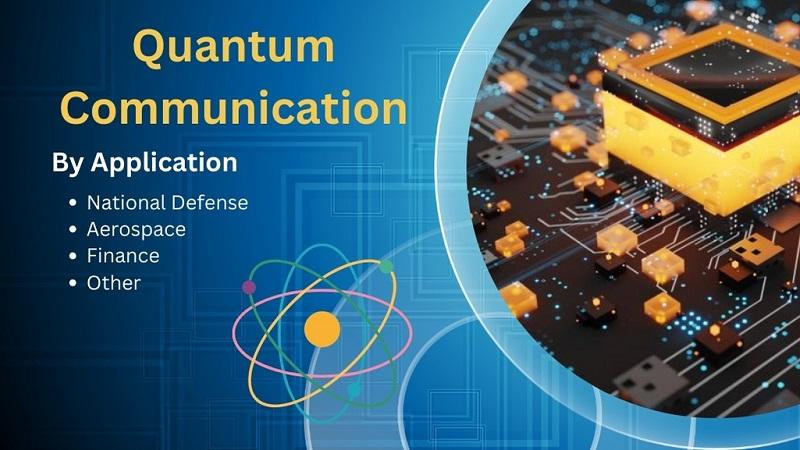
A modern Quantum Communication Market Platform is emerging as vendors move beyond standalone QKD links toward integrated, managed solutions. Platform approaches combine quantum hardware, control software, key management integration, monitoring, and orchestration into a single operational stack. For telecom operators, this platform model supports offering quantum-secure connectivity as a managed service with defined SLAs. For enterprises, platforms reduce complexity by abstracting photonics details and delivering usable keys into familiar encryption systems. Key platform components include quantum transmitters and receivers, synchronization and timing modules, authentication mechanisms for classical channels, and policy-driven key distribution services. Platforms also support multi-node networks with routing and key relay management, commonly using trusted-node architectures today. As deployments expand across metro areas, platform scalability—multi-tenant support, automated provisioning, and centralized monitoring—becomes a major differentiator for commercial readiness.
Interoperability is a critical platform requirement. Enterprises want quantum keys to integrate with IPsec, MACsec, TLS, and optical encryption, as well as with hardware security modules and enterprise key management systems. Platforms therefore provide APIs, connectors, and policy engines to control key rates, rotation schedules, and secure storage. Network management integration is also necessary: operators need alarms, performance dashboards, and fault workflows that align with existing OSS/BSS systems. Platforms must handle practical constraints such as fiber noise, temperature drift, and device aging, using stabilization algorithms and automated calibration. Security governance is equally important; platforms require strict access control, audit logging, and tamper-evidence for critical components. Some platforms include simulation and testing tools to validate link performance before deployment. As the market matures, buyers will compare platforms not only by physics performance but by how easily they fit into real operational environments and security compliance frameworks.
Platform evolution is also shaped by deployment economics. Dedicated dark fiber can be expensive, so platforms that enable coexistence with classical traffic can reduce costs and accelerate rollout. Hardware miniaturization and photonic integration reduce space and power requirements, making deployment feasible in standard telecom racks. Remote management capabilities reduce the need for specialized on-site personnel. Platforms increasingly include analytics to track key generation rates, error rates, and link availability, enabling proactive maintenance. They also support redundancy and failover, since key delivery must be reliable for mission-critical use cases. In parallel, satellite QKD platforms introduce additional layers—ground station coordination, atmospheric modeling, and scheduling—often integrated with terrestrial key networks. Hybrid terrestrial-satellite platforms could eventually provide national coverage patterns, though these are still early in commercialization and require significant coordination among operators and government stakeholders.
Over time, quantum communication platforms will align with broader secure networking trends. Many buyers will adopt hybrid architectures where post-quantum cryptography protects most traffic while QKD-derived keys secure the most sensitive links. Platforms that make this hybrid model easy—policy-based selection, automated key rotation, and unified reporting—will win adoption. Standardization will enable multi-vendor ecosystems, reducing lock-in and encouraging broader deployments. Long-term breakthroughs such as quantum repeaters could shift platforms from trusted-node relay toward entanglement-based end-to-end security, but near-term platforms must succeed with today’s constraints. Organizations evaluating platforms should assess operational maturity: monitoring, support, documentation, and integration capability. The platform winners will be those that translate quantum physics advantages into reliable services that security teams and telecom operators can deploy, manage, and audit at scale.
Top Trending Reports:

 Arabic
 French
 Spanish
 Portuguese
 Deutsch
 Turkish
 Dutch
Dutch
 Italiano
 Russian
 Romaian
 Portuguese (Brazil)
 Greek
Greek