
API Management Market Trends Include API Productization Event Governance And Zero Trust
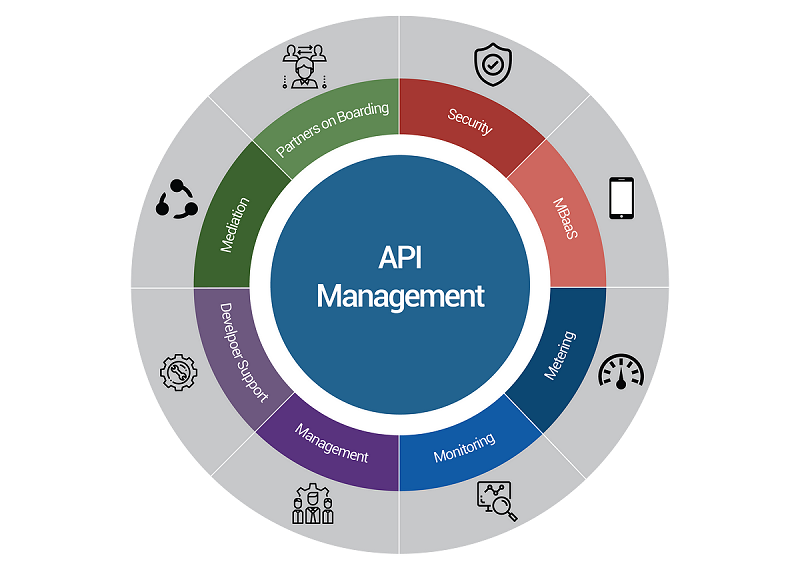
The API Management Market Trends show a shift from basic gateways toward full API productization. Organizations increasingly treat APIs as products with owners, roadmaps, SLAs, and developer experience requirements. This trend drives investment in developer portals, usage analytics, and feedback mechanisms. Another major trend is stronger security alignment with zero trust. Identity-based access control, mTLS, and fine-grained authorization are becoming more common, along with rate limiting and threat protection. Event-driven architecture adoption is also creating a trend toward event API governance, including schema registries and subscription management. Multi-cloud trends push demand for consistent API policies across environments and portable deployment models. Automation trends include policy-as-code and CI/CD integration, enabling standardized publishing and governance. Observability trends include deeper tracing and correlation between API calls and downstream microservices, improving troubleshooting. These trends reflect API management becoming a platform engineering discipline, not just a network gateway tool.
Developer experience trends are especially strong. Organizations want self-service onboarding, auto-generated documentation from OpenAPI specs, and API catalogs that improve discovery. Standardized error responses and naming conventions are trending as ways to improve consistency across teams. GraphQL adoption influences API management trends as well, requiring policies for query complexity, caching, and authorization. Monetization trends appear in partner ecosystems, where usage plans, quotas, and billing integration support paid API programs. Another trend is API security posture management—discovering shadow APIs, detecting misconfigurations, and monitoring sensitive data exposure. As API attacks grow, enterprises want continuous visibility and governance. Some platforms integrate with WAF and bot mitigation to protect public APIs. Regulatory and privacy trends influence how APIs expose personal data, increasing demand for consent-aware access and minimization. Service mesh convergence is another trend; organizations want unified policy between north-south API traffic and east-west service traffic. This pushes vendors to integrate gateways with service mesh and adopt common identity and policy frameworks. These trends show an expanding scope: API management now spans governance, security, developer productivity, and monetization.
Operational trends include more automation and resilience. Multi-region deployments and multi-gateway topologies are trending to reduce downtime risk. Blue-green deployments and canary releases for APIs reduce breaking change impact. Versioning and deprecation automation helps manage client transitions. Performance trends include high-throughput gateways and optimized routing for low-latency services. As organizations adopt edge computing, lightweight gateways at the edge become more relevant. Cost governance is also trending; API call volume can be high, and consumption-based pricing pushes enterprises to optimize caching and reduce unnecessary calls. Analytics trends include business-level API metrics—conversion, partner usage—not only technical metrics. AI-assisted analytics is emerging, identifying anomalies and forecasting capacity. However, governance remains essential; automated actions must be controlled. Platform teams are increasingly common, owning API management and standards. This organizational trend supports consistent adoption and reduces sprawl. Without a platform team, tools can be deployed inconsistently. Therefore, organizational maturity is part of the market trend landscape.
Future trends likely include deeper support for asynchronous APIs and event streaming. API management platforms may provide unified catalogs for REST and event interfaces. AI may help generate documentation, detect security issues, and recommend throttling policies. Posture management and continuous compliance will grow as enterprises seek auditability and control. Multi-cloud governance will remain a major demand driver, especially for global organizations. Partner APIs will expand, increasing demand for monetization and contract-like governance. The overall trend direction is toward API management as digital infrastructure: secure, observable, automated, and product-oriented. Organizations that adopt these trends can scale integrations faster, reduce operational risk, and build stronger ecosystems. Vendors that deliver strong security, excellent developer experience, and unified governance across modern architectures will align best with evolving API management market trends.
Top Trending Reports:

 English
 Arabic
 French
 Spanish
 Deutsch
 Turkish
 Dutch
Dutch
 Italiano
 Russian
 Romaian
 Portuguese (Brazil)
 Greek
Greek