
Blind to the Blatantly Obvious: Materialism vs Consciousness in a Modern World
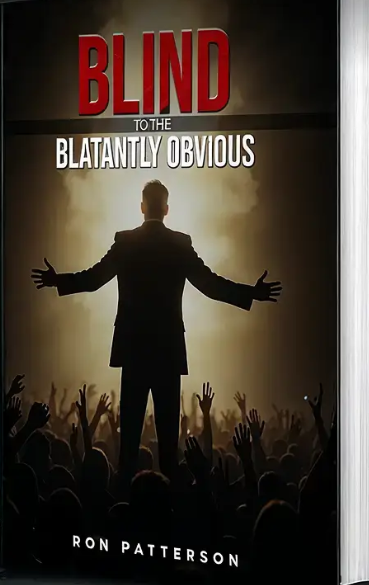
In an age dominated by technology, data, and relentless consumption, humanity often prides itself on being more informed and rational than ever before. Yet despite unprecedented access to information, many people remain trapped in rigid belief systems that prevent deeper understanding of reality. This paradox lies at the heart of Blind to the Blatantly Obvious by Ron Patterson, a work that challenges readers to confront uncomfortable truths about perception, belief, and the ongoing debate of materialism vs consciousness.
At its core, the struggle between materialism and consciousness reflects a much larger philosophical conflict: whether reality is fundamentally physical or fundamentally mental. While modern science largely favors material explanations, growing cracks in this worldview raise serious questions about whether consciousness can truly be reduced to matter alone.
The Comfort of Materialism
Materialism asserts that everything in existence can ultimately be explained by physical processes. Thoughts are chemical reactions, emotions are neurological signals, and consciousness itself is merely a byproduct of brain activity. This framework offers comfort because it promises predictability, control, and measurable certainty.
However, Blind to the Blatantly Obvious by Ron Patterson argues that materialism has become less a scientific stance and more a belief system—one that resists evidence when it challenges its assumptions. In doing so, materialism often dismisses subjective experience, intuition, and awareness as illusions rather than meaningful components of reality.
The problem arises when materialism stops asking questions. Instead of exploring consciousness as a fundamental aspect of existence, it treats awareness as an accidental side effect. This approach, while practical for technological progress, may be philosophically incomplete.
Consciousness: The Unsolved Mystery
Consciousness remains one of the greatest unsolved mysteries in human understanding. Despite advances in neuroscience, no one has explained how subjective experience arises from physical matter. Why does awareness feel like something rather than nothing? Why does experience exist at all?
This gap is central to the materialism vs consciousness debate. If consciousness cannot be reduced to physical processes, then materialism may be insufficient as a complete explanation of reality. Some thinkers propose that consciousness is fundamental, not secondary—that matter may arise from consciousness rather than the other way around.
Blind to the Blatantly Obvious by Ron Patterson challenges readers to examine why this possibility is so often rejected. The resistance, Patterson suggests, is not scientific but psychological. Accepting consciousness as fundamental would require rethinking deeply ingrained assumptions about identity, purpose, and control.
Why People Resist Obvious Contradictions
One of the book’s central themes is the human tendency to ignore contradictions when they threaten established beliefs. This cognitive blindness is not limited to religion or politics; it extends deeply into scientific and philosophical domains.
In the debate of materialism vs consciousness, many defenders of materialism acknowledge that consciousness is unexplained—yet still insist it must eventually be explained physically. This confidence persists despite decades of failure to bridge the gap. Rather than reconsider the framework, the mystery is postponed indefinitely.
According to Blind to the Blatantly Obvious by Ron Patterson, this behavior mirrors religious dogma more than scientific inquiry. When a theory becomes immune to falsification, it ceases to be exploratory and becomes ideological.
Identity and the Fear of Awareness
A major reason consciousness is so threatening lies in its implications for identity. If consciousness is fundamental, then the self may not be limited to the body. This challenges the materialist notion that identity begins at birth and ends at death.
Materialism offers a simple narrative: you are your brain, and when the brain stops, so do you. Consciousness-based models complicate this narrative, suggesting continuity beyond physical form or at least deeper layers of existence.
The fear of these implications fuels resistance. Blind to the Blatantly Obvious by Ron Patterson highlights how people often reject ideas not because they are illogical, but because they are unsettling. Consciousness forces introspection, while materialism allows detachment.
Science, Philosophy, and the Missing Bridge
Science excels at measuring external phenomena, but consciousness is inherently internal. This mismatch may explain why material explanations struggle. Measuring awareness from the outside is like trying to understand music by examining the instrument without listening to the sound.
The materialism vs consciousness conflict may not be resolvable through reduction alone. Instead, it may require integrating subjective experience into scientific understanding rather than dismissing it.
Patterson’s work does not argue against science, but against the assumption that science must be materialist. Blind to the Blatantly Obvious by Ron Patterson encourages a broader perspective—one that recognizes the limits of current models without abandoning rational inquiry.
Cultural Consequences of Denying Consciousness
The dominance of materialism shapes culture in profound ways. When consciousness is viewed as insignificant, meaning becomes secondary to productivity, and awareness is replaced by distraction. Consumerism thrives, while introspection declines.
This worldview encourages people to define success in terms of accumulation rather than understanding. As a result, society becomes efficient but shallow, informed but disconnected.
By contrast, acknowledging consciousness as fundamental could foster greater empathy, responsibility, and self-awareness. The debate is not merely academic; it has real implications for how individuals live and societies function.
Seeing What Has Been Ignored
The title Blind to the Blatantly Obvious by Ron Patterson reflects a simple but powerful idea: sometimes the most important truths are overlooked because they challenge our assumptions. Consciousness may be one such truth.
The ongoing materialism vs consciousness debate reveals that progress is not only about discovering new facts, but about questioning old frameworks. When belief systems—scientific or otherwise—become rigid, they obscure reality rather than illuminate it.
Conclusion
The conflict between materialism and consciousness is more than a philosophical disagreement; it is a reflection of how humanity understands itself. Blind to the Blatantly Obvious by Ron Patterson invites readers to step back, examine their assumptions, and consider whether the dominant worldview truly explains experience—or merely avoids its deepest questions.
Until consciousness is treated as something more than an inconvenient mystery, humanity may continue advancing technologically while remaining fundamentally confused about its own nature. Sometimes, seeing clearly requires not more information, but the courage to question what we think we already know.

 English
 Arabic
 French
 Spanish
 Deutsch
 Turkish
 Dutch
Dutch
 Italiano
 Russian
 Romaian
 Portuguese (Brazil)
 Greek
Greek