
How Compression Ratio Influences Scooter Fuel Efficiency
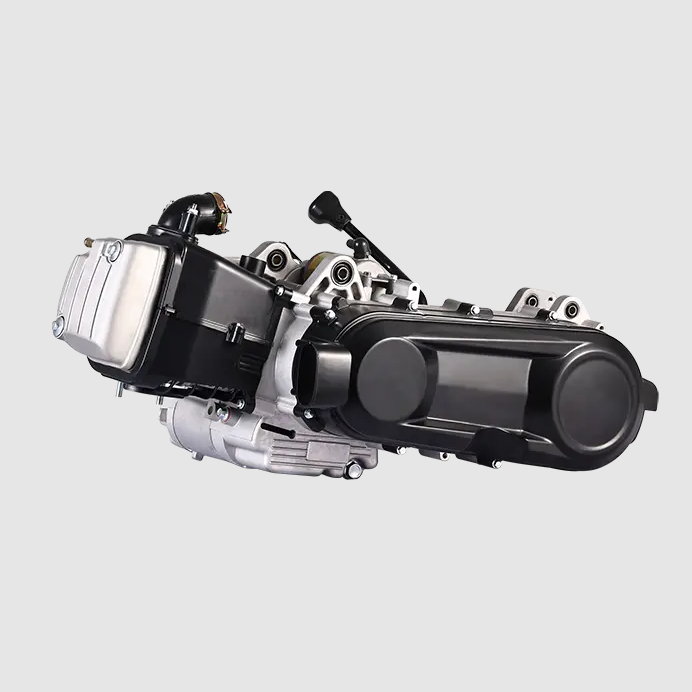
Introduction to Compression Ratio
The compression ratio of an internal combustion engine is a fundamental parameter that directly impacts fuel efficiency, power output, and combustion stability. In scooters, manufacturers carefully design the cylinder geometry to achieve an optimal balance between performance and economy. A higher compression ratio allows the engine to extract more mechanical energy from the fuel-air mixture, improving thermal efficiency. Conversely, a lower compression ratio may limit energy conversion, resulting in higher fuel consumption. A Scooter Engine Manufacturer must consider fuel type, engine durability, emission regulations, and rider experience when determining the ideal compression ratio for each model.
How Compression Ratio Affects Combustion Efficiency
Compression ratio refers to the ratio of the cylinder’s maximum volume to its minimum volume during the piston’s movement. Increasing this ratio compresses the air-fuel mixture more tightly before ignition, raising the temperature and pressure inside the combustion chamber. This higher compression enhances the efficiency of the fuel burn, generating more energy per unit of fuel. Efficient combustion reduces wasted hydrocarbons and lowers fuel consumption. Conversely, engines with lower compression ratios achieve less complete combustion, which can lead to higher fuel usage and increased emissions. In essence, compression ratio is a direct determinant of how effectively the engine converts chemical energy into mechanical work.
Impact on Fuel Economy
Fuel economy improves as compression ratio increases, up to the limit imposed by fuel quality and engine design. Higher compression allows scooters to achieve the same power output with less fuel. This is particularly beneficial in urban riding conditions, where frequent acceleration and deceleration demand efficient energy use. A Scooter Engine Manufacturer designing engines with elevated compression ratios must also ensure that the fuel type can withstand higher pressures without causing knocking or pre-ignition, which would reduce efficiency and risk damage. Properly matched compression ratios provide an ideal balance between fuel economy and safe operation, enhancing the appeal of small-displacement scooters.
Considerations for Engine Durability
While higher compression ratios improve fuel efficiency, they also increase mechanical and thermal stresses on engine components. Pistons, cylinder heads, and connecting rods must withstand higher pressures and temperatures. Material selection, cooling systems, and lubrication design become critical to maintaining engine longevity. Manufacturers incorporate reinforced alloys, advanced coatings, and improved heat dissipation strategies to allow higher compression ratios without compromising reliability. A well-engineered scooter can therefore benefit from higher efficiency while sustaining long-term durability, demonstrating the careful balance required by a Scooter Engine Manufacturer between performance and component life.
Influence on Performance and Rider Experience
The compression ratio not only affects fuel economy but also has secondary effects on engine responsiveness and torque delivery. Higher compression engines often produce stronger low-end torque and better acceleration, allowing riders to experience smoother and more efficient operation. However, excessive compression without proper tuning may result in engine knocking, reduced reliability, or the need for higher-octane fuels. Manufacturers must consider typical usage scenarios, environmental conditions, and fuel availability when selecting the compression ratio. By aligning compression design with practical requirements, scooters can deliver both fuel-efficient and enjoyable riding experiences.
Balancing Fuel Quality and Emission Standards
Modern scooters must comply with strict emission standards while remaining fuel-efficient. Higher compression ratios can help reduce unburned hydrocarbons, carbon monoxide, and particulate emissions by promoting complete combustion. However, fuel quality limitations, such as lower octane ratings, require careful adjustment to prevent pre-ignition. A Scooter Engine Manufacturer must balance compression ratio, combustion chamber design, and fuel type to optimize both fuel economy and environmental performance, ensuring regulatory compliance and consumer satisfaction.
Nominal displacement:50ml
Displacement:49.4ml
Bore:39mm
Stroke:41.4mm
Compression ratio:10.5:1
Maximum power:2.7kw/7000r/min
Maximum torque:3.2N·m/5500r/min
Maximin fuel comsumption:≤367g/kW·h
Minimum stable idle speed:1700±100r/min

 English
 Arabic
 French
 Spanish
 Portuguese
 Deutsch
 Turkish
 Dutch
Dutch
 Italiano
 Russian
 Portuguese (Brazil)
 Greek
Greek