
The Frustrating Distance Between Skincare Ingredients and Living Skin
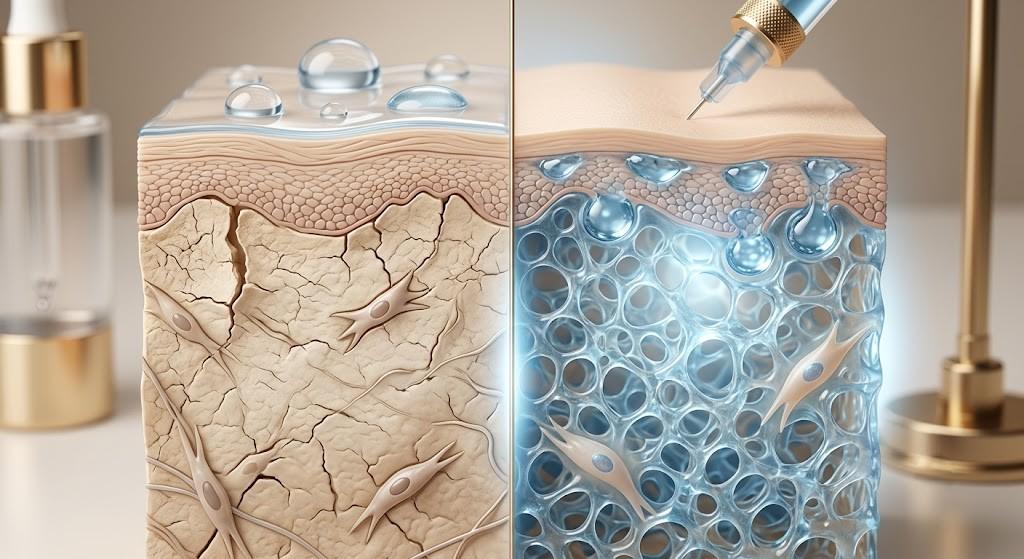
Every few months, a new skincare ingredient captures public attention. Niacinamide had its moment. Bakuchiol followed. Azelaic acid is enjoying renewed interest. Each compound carries legitimate scientific backing for specific benefits. And yet, despite the revolving door of promising actives, a core group of people find themselves stuck in a cycle of mild disappointment.
The issue is not the ingredients themselves. Most of them work — within a narrow band of capability. The issue is the distance between where the product lands and where the problem lives. That distance is defined by a biological barrier that exists for reasons far more important than cosmetic convenience. Bridging it requires going through the skin rather than over it.
SkinVive Juvéderm was developed with this precise challenge in mind. It does not attempt to formulate a smarter serum or develop a novel delivery mechanism. It removes the barrier from the equation by placing hyaluronic acid directly into the dermal tissue. Understanding why that move matters begins with a clear look at what stands between your skincare shelf and your living cells.
The Structure That Keeps Everything Out
Your outermost skin layer, the stratum corneum, is a compact arrangement of dead cells bonded by a matrix of lipids including ceramides, cholesterol, and free fatty acids. This structure exists specifically to prevent environmental agents, chemicals, and foreign molecules from accessing the living tissue beneath it. It is among the most effective biological barriers in the human body.
Hyaluronic acid molecules, the star ingredient in most hydrating serums, are structurally too large to negotiate this barrier. They sit on the surface after application, unable to thread through the tightly packed cellular architecture. Certain smaller molecules — low-molecular-weight antioxidants, some peptide fragments — can partially penetrate through the intercellular pathways. HA is not among them.
The sensation you feel after applying such a product is genuine but temporary. The serum acts as a humectant on the surface, gathering ambient moisture and holding it against the skin's exterior. This creates a transient feeling of softness and plumpness that most people interpret as deep hydration. Once the product is absorbed, evaporates, or is washed away, that feeling vanishes — and the deeper tissue has received nothing meaningful.
Where Structural Aging Unfolds
The dermis — the thick middle layer of your skin — is the theater where age-related changes play out most dramatically. Collagen fibers weave through this tissue to maintain structural integrity. Elastin allows it to recover after movement. The body's own hyaluronic acid molecules keep tissue moist and volumized from within. Together, these components determine whether skin reads as firm and bright or slack and dull.
In youth, the dermis is rich with these elements. It behaves like a sponge that has been thoroughly soaked — thick, resilient, and optically luminous because light enters and scatters back with a quality we recognize as healthy radiance. As decades pass, the body produces less collagen and natural hyaluronic acid reserves shrink. The sponge dries out. Its volume decreases. Fine lines, rough texture, and a sallow tone appear as direct consequences.
A topical product attempting to fix this situation is functionally equivalent to drizzling water onto the exterior of a sealed, dehydrated container. The moisture contacts the surface but never reaches what is inside. SkinVive Juvéderm bypasses this problem by depositing hydrating material directly into the dermis — placing water inside the sponge rather than around it.
How This Injectable Differs From What People Expect
The term "injectable" carries preconceptions for most consumers. They picture treatments that sculpt, lift, and add volume to targeted areas of the face. Those products exist and serve valuable purposes, but SkinVive Juvéderm is built for a fundamentally different objective. It aims to rehydrate, not reshape.
The formulation uses hyaluronic acid at a lower concentration than standard fillers and applies only light cross-linking during manufacture. This yields a thin, fluid gel that moves through tissue rather than anchoring in a fixed position. Unlike dense filler gels that resist displacement and build physical mass, this product is designed to disperse.
Once placed in the dermal layer via injection, it spreads evenly across the treatment zone without creating clumps, nodules, or changes to facial contour. Rather than pushing tissue outward to generate volume, it replenishes the water-holding capacity that aging and environmental stressors have depleted. The distinction between augmentation and rehydration is critical, and it shapes the character of every result the treatment produces.
What the Research Demonstrated
The clinical endpoint chosen for this product's evaluation was deliberately focused. Researchers assessed cheek smoothness using a validated scale before and after treatment, rather than measuring volume change or wrinkle severity. This narrow metric reveals exactly what the product was designed to accomplish.
Patients treated with SkinVive Juvéderm demonstrated statistically significant improvement in smoothness scores. These gains persisted for approximately six months following a single treatment session. The longevity is noteworthy because the product does not occupy physical space — it restores hydration at a depth that sustains visible surface improvement over an extended timeframe.
Internal dermal hydration generates surface changes that follow a predictable sequence. Fine lines caused by dehydration soften as supporting tissue re-expands. Skin texture evens out as cells at multiple depths receive consistent moisture. Pores appear refined because plumped surrounding tissue presses against their borders. That luminous quality associated with well-rested, healthy skin is ultimately the result of light reflecting off a uniformly hydrated, smooth surface.
The Appointment in Practice
The procedure requires minimal time and no special preparation. A practitioner uses a fine needle or small-gauge cannula to deliver the product across the cheeks or wider facial area through a series of evenly spaced injection points. The pattern is systematic, ensuring comprehensive coverage throughout the treatment zone.
The entire visit takes roughly fifteen to twenty minutes. Small red marks are visible at each injection point immediately afterward but typically fade within hours. Some patients experience mild swelling over the following day or two, though it resolves without intervention. Most people return to their regular schedule the same day.
A single session is usually enough to produce visible improvement lasting about six months. For individuals with significantly depleted skin, a practitioner may suggest a brief follow-up visit approximately four weeks after the initial treatment. Under standard circumstances, one appointment constitutes the complete protocol.
What Your Skincare Collection Still Contributes
Adopting an injectable treatment does not render your topical regimen obsolete. It clarifies what each product can realistically accomplish. This understanding, paradoxically, makes your existing routine work harder rather than less.
With deep structural hydration addressed by something like SkinVive Juvéderm, your serums can concentrate on the surface-level tasks where they have always been most effective. Vitamin C targets oxidative damage and pigmentation in the uppermost cell layers. Retinoids accelerate epidermal turnover. Barrier-repair creams strengthen the lipid structure of the stratum corneum itself. Each mechanism operates precisely at the depth where topical products naturally reside.
Think of it as treating the soil before planting a garden. Seeds placed in compacted, nutrient-poor earth produce weak growth regardless of their quality. Amend the soil first and those same seeds flourish into healthy plants. Deep hydrating treatment amends the dermal soil. Everything applied to the surface afterward benefits enormously from that improvement.
Sun protection remains equally critical regardless of what other treatments form part of your regimen. UV radiation directly degrades collagen and depletes hyaluronic acid within the dermis, which is the very tissue this treatment works to restore. Consistent sunscreen use protects that investment and supports lasting skin health.
Understanding What This Treatment Is and Is Not
No single intervention addresses every skin concern, and maintaining realistic expectations leads to better outcomes and greater satisfaction. This product will not reposition sagging tissue, eliminate deep creases formed by decades of facial expression, or replicate the results of a surgical procedure. Those goals require traditional volumizing fillers, neuromodulators, or consultation with a surgical specialist.
SkinVive Juvéderm is designed for improvements in skin quality and texture specifically. The candidate who benefits most examines their reflection and notices a complexion that looks uniformly depleted — not structurally descended or deeply lined, but rough, dull, and marked by the fine creases that signal chronic dehydration. Persistent lack of luminosity and uneven surface texture define the treatment's ideal scope.
The skin's protective barrier performs its evolutionary function with precision, and that precision is the reason topical hydrating products eventually reach a ceiling. By placing hyaluronic acid beneath that barrier into tissue where the body's natural supply has declined, this treatment resolves the actual biological origin of dull, dehydrated skin from the inside out.

 English
 Arabic
 Spanish
 Portuguese
 Deutsch
 Turkish
 Dutch
Dutch
 Italiano
 Russian
 Romaian
 Portuguese (Brazil)
 Greek
Greek