
Plastic Injection Mold Maker: Where Precision Meets Production
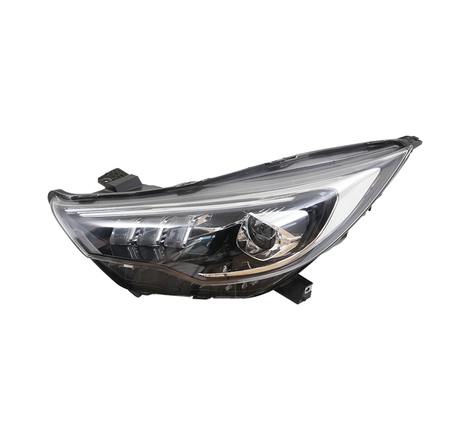
A plastic injection mold maker sits at the foundation of modern manufacturing. Before a single plastic part rolls off a production line — whether it's an automotive interior component, a medical device housing, a consumer electronics shell, or a household appliance part — someone had to design and machine the mold that gives that part its shape, dimensions, and surface finish. The quality of that mold determines the quality of every part produced from it across the mold's entire service life, which makes the mold maker selection one of the most consequential decisions in a product development program.
Mold steel selection is where a plastic injection mold maker's technical judgment first becomes visible. Different steel grades serve different production requirements. P20 pre-hardened steel handles moderate production volumes and machines efficiently, making it a practical choice for prototype tooling or lower-volume production runs. H13 tool steel, through-hardened after machining, handles higher injection pressures and abrasive resins with significantly longer service life.
CNC machining capability defines what a plastic injection mold maker can hold in terms of dimensional accuracy and surface finish. High-speed machining centers with positional accuracy in the micron range produce cavity and core surfaces that require minimal hand polishing — reducing the variability that manual finishing introduces. EDM — electrical discharge machining — handles features that rotating cutters cannot reach: deep ribs, sharp internal corners, textured surfaces, and complex core pin geometry. A mold maker with both CNC and EDM capability in-house maintains tighter control over dimensional outcomes than one relying on outsourced machining for either process.
Cooling system design inside an injection mold is a factor that directly affects cycle time and part quality but is invisible once the mold is assembled. Conformal cooling channels — machined to follow the contour of the cavity surface rather than running in straight lines — reduce temperature differential across the part during cooling, which minimizes warpage and allows faster cycle times. A plastic injection mold maker with experience in conformal cooling design and the machining capability to produce curved channel geometry delivers production efficiency advantages that compound across millions of shots over a mold's service life.
Gate design and runner system configuration affect how molten resin enters and fills the cavity. Hot runner systems eliminate the cold runner sprue and runner waste generated by conventional gating, reducing material consumption and cycle time at the cost of higher tooling investment. Cold runner molds are simpler and less expensive to build and maintain, making them appropriate for lower volumes or materials that are easy to regrind. A plastic injection mold maker with experience across both systems gives clients the design input needed to make an informed choice based on production economics rather than tooling defaults.
Mold flow analysis — simulation of resin behavior during injection — is a design validation step that identifies fill problems, weld line locations, sink marks, and air trap positions before steel is cut. Plastic injection mold makers who integrate mold flow analysis into their design process reduce the expensive and time-consuming mold modification cycles that result from discovering these issues during trial runs.

 English
 Arabic
 French
 Spanish
 Portuguese
 Deutsch
 Turkish
 Dutch
Dutch
 Russian
 Romaian
 Portuguese (Brazil)
 Greek
Greek