
Real-Time Occupancy Analytics Enables Dynamic Space Management
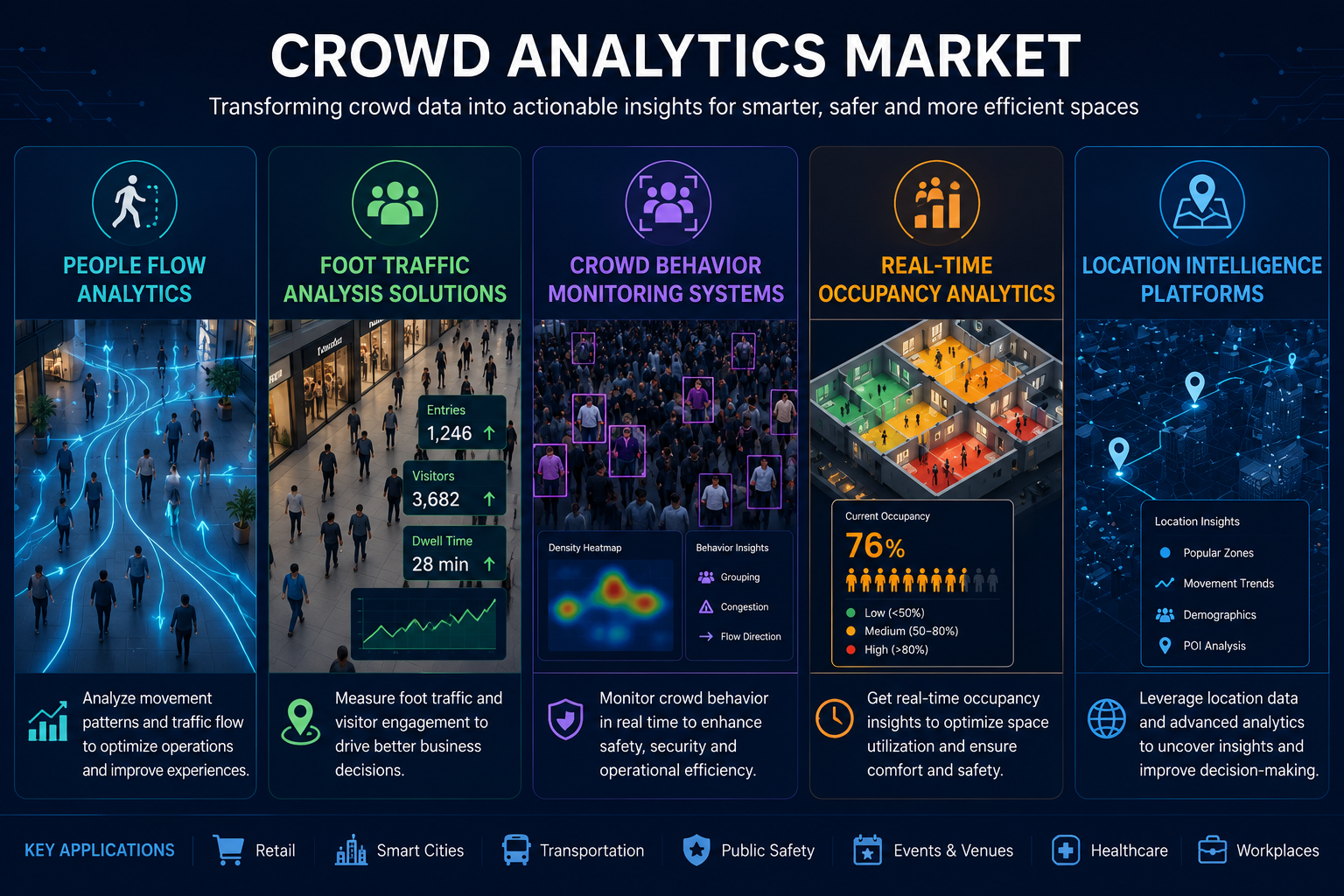
Most buildings operate on fixed schedules. Lights turn on at 8 AM and off at 6 PM regardless of how many people are present. HVAC systems heat and cool at full capacity even when offices are empty. Cleaning crews follow the same routes every night, whether rooms were used or not. According to a market report from Market Research Future (MRFR), Real-Time Occupancy Analytics and Crowd Behavior Monitoring Systems are enabling a more dynamic approach. Real-time occupancy data drives building systems that respond to actual usage, saving energy and improving comfort.
The economic and environmental case is compelling. Commercial buildings account for a significant percentage of energy consumption in developed economies. Much of this energy is wasted heating, cooling, and lighting empty spaces. Real-time occupancy analytics eliminates this waste by aligning building operations with actual presence.
How Real-Time Occupancy Analytics Works
Real-time occupancy analytics systems use sensors to count people in each zone of a building and update counts continuously. The most common sensor types are thermal (detecting body heat), optical (detecting movement), and passive infrared (detecting changes in infrared radiation). Some systems also use Wi-Fi or Bluetooth detection, though these methods are less accurate for real-time counts.
The analytics platform aggregates occupancy data across zones and maintains a real-time model of building usage. It knows how many people are in each office, conference room, open area, and corridor. It knows how long people have been in each zone and whether occupancy is increasing, decreasing, or stable.
An office building manager might use real-time occupancy analytics to optimize HVAC operation. The system knows that the west wing is only 30 percent occupied on Tuesday mornings. It reduces airflow to that wing, saving fan and conditioning energy. At 1 PM, occupancy in the west wing increases to 80 percent as afternoon meetings begin. The system responds within minutes, increasing airflow to restore comfort.
Crowd Behavior Monitoring Systems for Anomaly Detection
While real-time occupancy analytics focuses on counting people, crowd behavior monitoring systems detect unusual patterns. A sudden drop in occupancy across a building might indicate an emergency evacuation. A sustained increase in occupancy in a restricted area might indicate a security breach. Unexpected occupancy patterns during overnight hours might indicate unauthorized access.
A hospital might deploy both systems. Real-time occupancy analytics tracks patient and staff locations for operational purposes—knowing where patients are for transport, where staff are for call systems. Crowd behavior monitoring watches for anomalies: a crowd gathering in a corridor might indicate an emergency; people lingering outside a medication storage area might indicate a security risk.
The MRFR report notes that the combination of real-time counts and behavioral monitoring is more valuable than either alone. Counts without behavioral context cannot distinguish normal from suspicious. Behavioral monitoring without accurate counts cannot quantify the scale of an event.
Integration with Building Management Systems
The full value of real-time occupancy analytics is realized through integration with building management systems (BMS). The occupancy platform sends real-time counts to the HVAC control system, which adjusts airflow zone by zone. It sends counts to the lighting control system, which dims lights in empty zones and brightens occupied ones. It sends counts to the cleaning management system, which generates task lists based on which rooms were actually used.
A corporate campus might integrate occupancy analytics with its cleaning contract. Instead of cleaning every office every night, the cleaning crew receives a prioritized list: offices that were occupied get full cleaning; offices that were unoccupied get only trash removal and a quick vacuum. The facility manager tracks occupancy over time and adjusts cleaning budgets accordingly.
The MRFR report documents energy savings of 20 to 40 percent from HVAC optimization based on real-time occupancy. Lighting savings are even higher, as lights can be turned off completely in unoccupied zones rather than dimmed. Maintenance savings come from targeted cleaning and reduced wear on systems that operate only when needed.
Privacy and Employee Acceptance
Real-time occupancy analytics for building management is generally less privacy-sensitive than other crowd analytics applications, because it does not track individuals. The system knows how many people are in a zone, not who they are. It cannot distinguish between employees, visitors, or contractors. It cannot track an individual's movement through the building.
Nevertheless, the MRFR report recommends transparent deployment. Employees should know that occupancy sensors are present and what data they collect. They should understand that the data is used for building automation, not for individual performance monitoring. Clear policies build trust and encourage acceptance.
Conclusion
Fixed building schedules are relics of a less data-rich era. Real-Time Occupancy Analytics provides the live data needed to align building operations with actual usage. Crowd Behavior Monitoring Systems add anomaly detection for safety and security. Together, they enable dynamic buildings that save energy, reduce costs, and improve comfort.

 English
 Arabic
 French
 Spanish
 Portuguese
 Deutsch
 Turkish
 Dutch
Dutch
 Italiano
 Russian
 Romaian
 Portuguese (Brazil)