
Sanctuary Reforged: The Art of the Grind in Diablo II Resurrected
There is a specific kind of joy that comes from hearing the chime of a level up in Diablo II Resurrected while standing in the middle of a monster-packed chaos. It is a sound that triggers an almost Pavlovian response—a quick pause, a deep breath, and the satisfying allocation of a new skill point into a favorite ability. This moment captures the essence of what makes Blizzard Entertainment's remastered classic so compelling. It is not just about nostalgia; it is about the perfect preservation of a gameplay loop that has defined the action RPG genre for over two decades. Diablo II Resurrected proves that some designs are so fundamentally sound that they transcend the era of their creation.
The world of Sanctuary has always been a harsh place. From the moment you step out of the Rogue Encampment, the game establishes its tone: you are not an overpowered hero destined to win; you are a survivor in a land overrun by demons. This difficulty is integral to the experience. Every zombie you crush, every fallen shaman you silence, contributes to a gradual sense of empowerment that feels earned rather than granted. The progression system is deceptively simple—gain experience, earn levels, invest in skills and stats—but the depth lies in the choices. Do you specialize in a single elemental tree or spread your points thin for versatility? Do you pour stats into vitality for survival or into energy for more spell casting? These decisions shape your identity and your effectiveness against the horrors that await.
But the true heart of the game, the pulse that has kept it alive for so long, is the relentless pursuit of gear. This is where the concept of farming transcends its repetitive connotations and becomes a meditative ritual. Players return to iconic locations like the Ancient Tunnels or the Chaos Sanctuary not out of narrative necessity, but out of hope. The hope that this run, this chest, this boss kill will yield something extraordinary. The itemization is legendary for a reason. It is a complex web of prefixes, suffixes, ethereal bases, and socket counts. For the uninitiated, it can be overwhelming. For the devoted, it is a language of its own. A simple gray item can be more valuable than a unique gold one if it has the right number of sockets for a powerful runeword.
Speaking of runewords, they represent the pinnacle of the game's aspirational content. The thrill of finding a high-level rune is unmatched. It is a moment of pure, unadulterated dopamine. Suddenly, the player is not just clearing monsters; they are mentally inventorying their stash, checking if they have the right base item, and imagining the power spike that awaits. Creating a runeword like Grief or Infinity feels like a rite of passage, a mark that you have graduated from mere survival to true mastery over the game's systems. These items are not just powerful; they are often build-defining, enabling new strategies and playstyles that keep the experience fresh hundreds of hours in.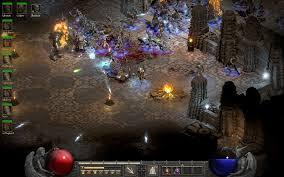
The visual and audio upgrades in Diablo II Resurrected serve to amplify these core experiences. The spell effects are more vibrant, the monster designs more gruesome, and the atmospheric sounds more immersive. Yet, the game wisely never interferes with the mechanics. The drop rates are unchanged. The monster immunities are unchanged. The challenge remains authentic. This is not a reimagining; it is a restoration. It allows a new generation to understand why veterans still talk about the time they found a Griffon's Eye or rolled a perfect stat on their Call to Arms. In an industry obsessed with the new, runeword d2r stands as a confident monument to the old, reminding us that the perfect game is not always the one with the newest features, but the one with the most enduring soul.

 Arabic
 French
 Spanish
 Portuguese
 Deutsch
 Turkish
 Dutch
Dutch
 Italiano
 Russian
 Romaian
 Portuguese (Brazil)
 Greek
Greek