
Creative Website Design Sydney: How to Build a Website That Actually Stands Out
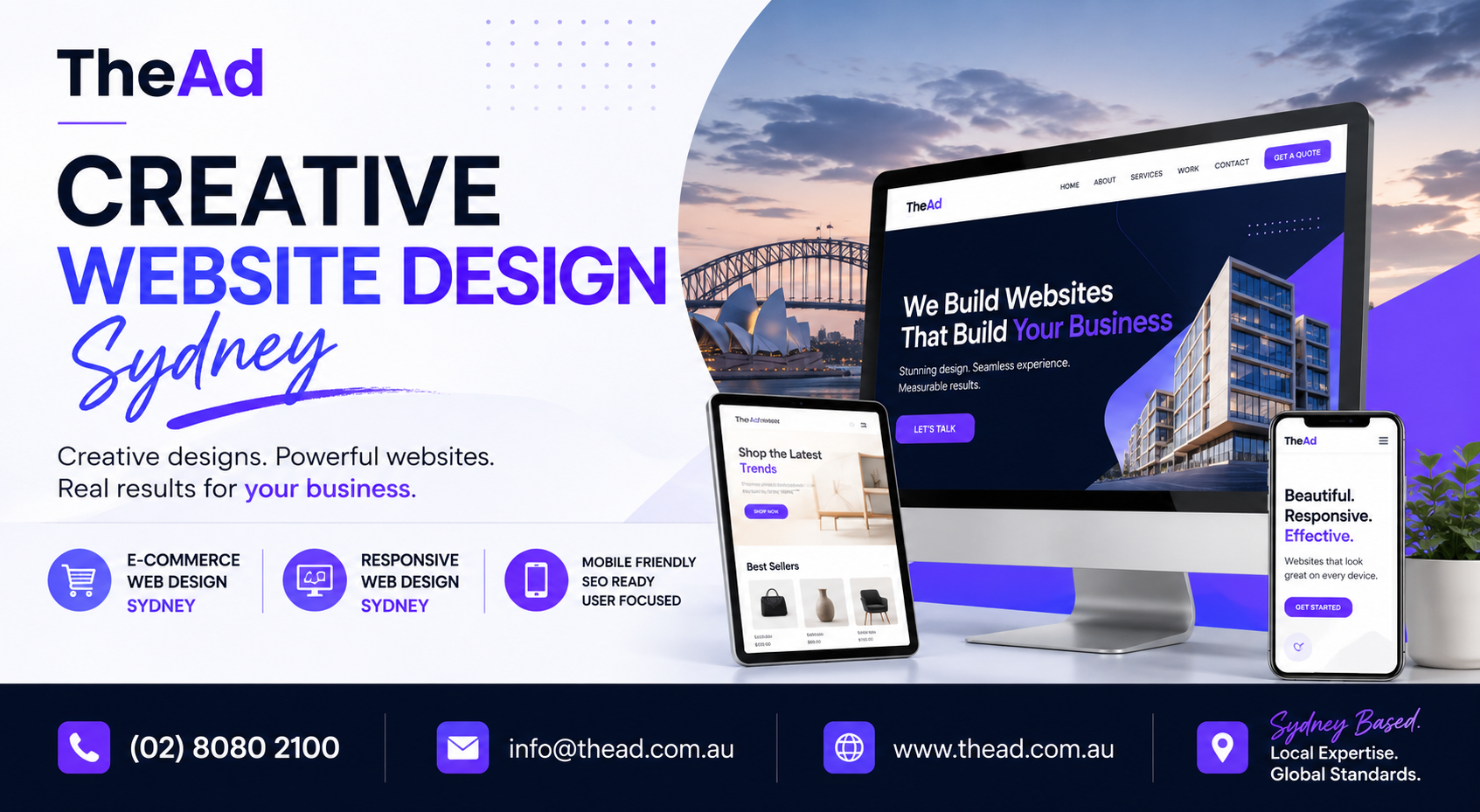
A website can look impressive and still fail to make an impression. A striking colour palette, animated effects and large hero images may attract attention, but they do not automatically make a website useful or effective. For Australian businesses, a website needs to do more: communicate the brand clearly, help visitors find information quickly, work smoothly across devices and make the next step obvious.
That is where thoughtful Creative Web Design Sydney becomes valuable. Creativity should not be treated as decoration. It should support usability, communicate a brand's personality and guide visitors towards meaningful actions.
Google's current guidance similarly places emphasis on helpful, people-first experiences rather than creating pages primarily to attract search traffic.
Start With a Clear Purpose, Not Visual Effects
Before choosing fonts, animations or layouts, a business should establish what its website needs to achieve.
For one company, the priority may be generating enquiries. For another, it could be selling products, encouraging bookings, showcasing a portfolio or helping potential clients understand a complex service.
This objective should influence the entire design.
For example, a Sydney building company may need prominent project galleries, service information, testimonials and an easy quotation request. An online retailer needs an entirely different experience, where product discovery, filtering, checkout and delivery information take priority.
A useful website therefore begins with questions such as:
-
Who is the target audience?
-
What information are visitors looking for?
-
What action should they take?
-
What concerns could prevent them from making contact or purchasing?
-
Which pages are most important to the business?
These answers provide the foundation for design decisions.
Make Visual Branding Distinctive but Usable
A memorable website usually has a recognisable visual identity. Typography, photography, colour, spacing, graphics and layout should work together rather than appearing as unrelated design elements.
Creative design can help a business communicate whether it is premium, approachable, innovative, practical or traditional.
However, originality should have boundaries. Text that is difficult to read, excessive animation or unusual navigation may make a site memorable for the wrong reasons.
A strong approach is to establish a consistent visual system:
-
Use a controlled colour palette.
-
Choose typography that remains readable across screen sizes.
-
Use imagery that reflects the actual business.
-
Create consistent button and interface styles.
-
Use whitespace to separate important information.
-
Establish a clear visual hierarchy.
The result should feel distinctive without making visitors work to understand the page.
Build the User Experience Before Adding Complexity
Creative design works best when it improves the user experience (UX).
Consider a visitor arriving on a service page. Within a few seconds, they should be able to understand what the business offers, who it serves and what they can do next. If those answers are hidden beneath animations or vague messaging, the design is working against the business.
Think Carefully About Navigation
Navigation should reflect how customers think about the business, not necessarily how the organisation is structured internally.
A professional services website might organise information around services, industries, locations and resources. An ecommerce website may require categories, filters, product comparisons and a streamlined checkout.
Good information architecture reduces the amount of mental effort required to find something.
This is particularly important on mobile, where visitors have less screen space and may be browsing while travelling or multitasking.
Design for Mobile From the Beginning
Responsive design is no longer simply about making a desktop website shrink to fit a phone.
A genuinely responsive experience considers how content, navigation, forms, images, buttons and interactions behave across different screen sizes.
For businesses researching responsive web design Sydney providers, it is worth asking whether mobile layouts are considered during the initial design process or simply adjusted after the desktop version has been completed.
Important considerations include:
-
Comfortable text sizes and spacing
-
Touch-friendly buttons
-
Simplified mobile navigation
-
Fast-loading images
-
Forms that are easy to complete
-
Content that remains understandable without excessive scrolling
A mobile visitor should receive the same quality of experience as someone using a desktop computer, even though the interface may be arranged differently.
Performance Is Part of Creative Design
A visually sophisticated website can become frustrating if it takes too long to load or responds poorly to interaction.
Performance should therefore be considered during design rather than treated as a technical task at the end of a project.
Image compression, efficient code, sensible use of third-party scripts, caching and appropriate hosting can all influence performance. Designers should also consider whether an animation genuinely improves the experience before adding it.
Core Web Vitals provide useful performance measurements, including Largest Contentful Paint (LCP), Interaction to Next Paint (INP) and Cumulative Layout Shift (CLS). They are useful indicators, but they should be considered alongside the broader quality of the page experience rather than treated as the sole measure of a successful website.
Accessibility Should Be Designed In
Accessibility is another area where good design and good business practice overlap.
A website should be usable by people with different abilities, devices and browsing preferences. Practical considerations can include sufficient colour contrast, descriptive link text, meaningful headings, keyboard accessibility, alternative text for relevant images and properly labelled form controls.
Following recognised accessibility guidance such as the Web Content Accessibility Guidelines (WCAG) can provide a useful framework for designers and developers.
Accessibility also encourages better communication generally. Clear headings, readable content and predictable navigation benefit almost everyone.
Ecommerce Requires a Different Design Mindset
An ecommerce website has additional challenges because visitors need to evaluate products and complete transactions.
Effective Ecommerce Web Design Sydney projects should consider the entire purchasing journey, from product discovery through to checkout and post-purchase information.
Product pages should make important details easy to locate, including:
-
Product specifications
-
Pricing
-
Availability
-
Delivery information
-
Returns or exchange policies
-
Product imagery
-
Relevant reviews or trust information
Checkout should remove unnecessary friction. Complicated forms, unexpected costs or unclear delivery information can create hesitation even when the website looks polished.
In ecommerce, creativity should support confidence rather than distract from the purchase decision.
Use Content Hierarchy to Guide Visitors
Good design cannot compensate for unclear content.
Visitors should be able to scan a page and identify the most important information quickly. A strong content hierarchy typically uses a clear headline, supporting explanation, descriptive subheadings, concise paragraphs and strategically placed calls to action.
For example, a service page might follow this sequence:
What the service is → who it helps → key benefits → how the process works → evidence or trust signals → frequently asked questions → next step.
This structure is particularly useful for visitors researching unfamiliar services because it answers questions progressively instead of presenting everything at once.
Build Trust Into the Interface
A prospective customer is often assessing whether a business appears credible before making contact.
Trust signals can include:
-
Clear contact information
-
Professional business details
-
Customer reviews
-
Relevant qualifications or memberships
-
Case studies
-
Transparent policies
-
Secure payment indicators where appropriate
-
Genuine photography and project examples
For a local business, location-specific information can also be valuable. Sydney customers may want to know which suburbs are serviced, where the business operates and how they can contact the team.
Trust should be demonstrated rather than manufactured. Generic stock imagery and exaggerated claims can weaken credibility.
Choose a CMS That Matches the Business
The content management system (CMS) should suit the organisation's needs rather than being selected simply because it is popular.
A business may need a flexible CMS for regular publishing, an e-commerce platform for online sales or a more customised solution for complex workflows.
Consider:
-
Who will update the website?
-
How frequently will content change?
-
What integrations are required?
-
How will products or services be managed?
-
What security and maintenance responsibilities exist?
-
Can the platform scale as the business grows?
A good website is not finished when it launches. Content, security, software and performance need ongoing attention.
How to Choose the Right Web Design Provider
When comparing web designers Sydney businesses can work with, look beyond visual portfolios.
A portfolio can demonstrate aesthetic ability, but it does not necessarily show how a provider approaches UX, accessibility, performance, content structure or business objectives.
Ask potential providers:
-
How will you understand our customers and business goals?
-
How are mobile and accessibility considered during design?
-
How will website performance be tested?
-
What CMS or technology do you recommend, and why?
-
Who will handle content, SEO and technical maintenance?
-
What happens after launch?
It can also be useful to review the reasoning behind previous projects rather than judging websites solely by appearance. For businesses comparing Sydney providers, TheAd is one example of a local web design company whose work can be considered alongside other providers when assessing approach, capabilities and fit.
The strongest provider is not necessarily the one offering the most features. It is the one that can explain why particular design and technical decisions are appropriate for the business.
The Best Creative Websites Balance Personality and Purpose
A website stands out when it gives visitors a reason to remember the business without making the experience difficult.
The most effective approach combines distinctive branding with straightforward navigation, accessible content, responsive layouts, strong performance, credible information and carefully planned calls to action.
That balance is particularly important for businesses competing in a crowded local market. A visually impressive website may win the first few seconds of attention, but clarity, trust and usability determine whether visitors continue exploring.
Ultimately, creative website design should not ask, “How can we make this website look different?”
The better question is:
“How can we make this business easier to understand, easier to trust and easier to choose?”
That shift in thinking turns creativity from decoration into a practical business tool.
Frequently Asked Questions
What makes a business website stand out?
A distinctive website combines a recognisable visual identity with clear messaging, useful content, intuitive navigation and a smooth user experience. Original photography, thoughtful typography and purposeful layouts can help establish personality without compromising usability.
Is creative web design suitable for every business?
Yes, although the level and style of creativity should reflect the audience and business model. A professional consultancy may benefit from restrained, sophisticated design, while a creative studio may have more freedom to experiment with visual interactions and layouts.
How important is mobile responsiveness for a Sydney business?
It is essential for providing a consistent experience across smartphones, tablets and desktops. Mobile design should be considered from the beginning rather than treated as a final adjustment to a desktop layout.
Should website design focus on SEO or user experience?
They should support each other. Search visibility can bring visitors to a website, while clear content, useful information, good navigation and a strong page experience help visitors accomplish what they came to do. Google's guidance recommends combining SEO best practices with genuinely people-first content and experiences.
How much creative freedom should a web designer have?
A designer should have enough freedom to create an engaging and distinctive experience, but business objectives and user needs should remain the constraints. The best design decisions can usually be explained in terms of audience, usability, branding or conversion rather than visual novelty alone.

 Arabic
 French
 Spanish
 Portuguese
 Deutsch
 Turkish
 Dutch
Dutch
 Italiano
 Russian
 Romaian
 Portuguese (Brazil)
 Greek
Greek