
YG-1 Tackifying Resin for Stable Uncured Rubber Tack
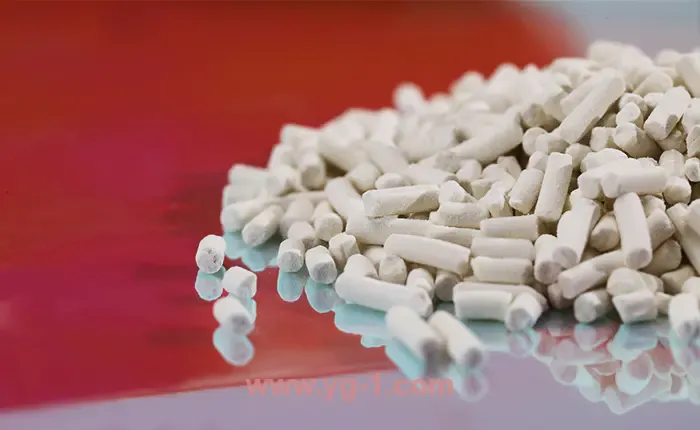
In rubber manufacturing, tack is an important characteristic during mixing, calendaring, extrusion, lamination, storage, and assembly. The natural stickiness of an uncured compound allows separate rubber layers to hold together before vulcanization, yet excessive adhesion may create handling difficulties.tackfying resin can regulate this balance by modifying interactions within the polymer matrix, while YG-1 provides resin solutions designed for rubber processing needs. How does this material influence the tack of uncured rubber?
Uncured rubber contains polymer chains that remain mobile before crosslinking takes place. Their surface characteristics allow one rubber layer to contact and interact with another. This behavior is valuable during tire building, hose production, belt fabrication, rubber sheet processing, and various bonding operations. However, natural tack varies according to polymer type, molecular structure, temperature, filler content, processing history, and storage conditions. A compound with insufficient adhesion may fail to maintain contact between layers, while excessive stickiness can cause material to cling to rolls, liners, tools, or processing equipment.
A suitable formulation therefore needs a controlled level of surface interaction. Resin additives can participate in this process by changing the balance between polymer mobility, surface wetting, and intermolecular attraction. When a compatible resin disperses throughout the rubber phase, it can modify surface characteristics and encourage contact between adjacent layers. This interaction may support useful adhesion during assembly while keeping the compound manageable during production.
The influence of resin is closely related to its compatibility with the selected elastomer. Natural rubber, styrene-butadiene rubber, polybutadiene rubber, and other synthetic materials possess different molecular characteristics. A material that performs effectively within one polymer system may produce a different result in another formulation. For this reason, manufacturers generally evaluate the polymer structure, filler package, processing temperature, and intended application before selecting a suitable resin solution.
Softening behavior also has an important connection with tack. Resin molecules can influence polymer segment mobility under processing conditions. When the compound reaches an appropriate state, polymer chains can interact across contacting surfaces with suitable efficiency. This can help create a useful level of adhesion without causing excessive sticking. The desired result is not simply maximum tack, but a controlled surface response that matches the needs of the manufacturing process.
Dosage is another factor that deserves careful attention. A formulation containing an insufficient amount may show limited changes in surface adhesion, whereas excessive addition can influence viscosity, hardness, heat behavior, or other compound characteristics. The appropriate quantity depends on the polymer system, resin characteristics, filler composition, processing method, and desired final performance. Laboratory trials can help manufacturers establish a suitable formulation range before production begins.
Processing conditions can also influence the final result. Mixing temperature, shear intensity, mixing sequence, storage environment, and compound history may affect how the material behaves within the rubber matrix. During internal mixing, uniform distribution is particularly important. Poor dispersion can produce local differences across the compound, which may result in inconsistent handling characteristics. Effective incorporation allows the additive to distribute throughout the rubber phase and interact with the formulation as intended.
Temperature has a direct relationship with molecular mobility. As the compound becomes warmer, polymer chains and resin components may become more mobile, which can influence wetting and surface contact. During cooling or storage, the same compound may exhibit a different surface response because molecular movement changes with temperature. Manufacturers should therefore consider actual production and storage conditions when evaluating formulation performance.
The interaction with fillers also deserves attention. Carbon black, silica, mineral fillers, and other reinforcing materials can influence polymer mobility and surface characteristics. Their dispersion state may affect how the resin interacts with the surrounding polymer phase. Considering the resin and filler package as parts of the same formulation can help manufacturers maintain consistent processing behavior and reduce unexpected variation between production batches.
Tack is only one aspect of rubber compound performance. A suitable formulation may also require controlled viscosity, strength, flexibility, aging resistance, thermal stability, and processing characteristics. Increasing surface adhesion without considering these properties can create unwanted changes elsewhere in the compound. A balanced approach allows manufacturers to evaluate tack together with the broader requirements of the finished rubber product.
Different industries may also require different adhesion profiles. Tire components, conveyor belts, rubber sheets, hoses, footwear materials, and industrial rubber products operate under different manufacturing conditions. A formulation designed for one application may not suit another. Reviewing the production method, equipment, temperature range, polymer type, filler system, and handling requirements can help users identify an appropriate material.
For industrial manufacturers, raw material consistency is another practical consideration. Stable quality between batches can simplify formulation management and support predictable production conditions. Technical communication with a supplier can also assist the selection process. Information about the polymer system, filler composition, processing environment, target tack level, and intended application gives technical teams useful information for evaluating a suitable solution.
YG-1 focuses on rubber chemical applications and formulation requirements, supporting manufacturers that require materials for different processing environments. Its product-oriented approach allows users to consider resin characteristics alongside their existing rubber formulations. For companies seeking technical information about this material and its role in rubber production, the YG-1 industry resource at https://www.yg-1.com/ provides additional background for formulation evaluation.
As rubber manufacturing continues to focus on controlled processing and consistent product characteristics, understanding the relationship between resin chemistry and uncured rubber tack remains important. A properly selected tackifying resin can support adhesion, handling, mixing, and assembly while maintaining compatibility with the overall formulation. By evaluating compatibility, dosage, temperature, dispersion, filler interactions, and application requirements together, manufacturers can develop a practical formulation strategy that fits their production process.

 English
 Arabic
 French
 Spanish
 Portuguese
 Deutsch
 Turkish
 Dutch
Dutch
 Russian
 Romaian
 Portuguese (Brazil)
 Greek
Greek