
Why does cellscraper angle affect cell recovery in culture work?
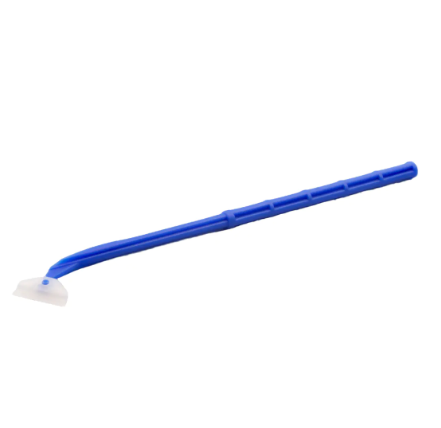
In cellscraper usage, scraping angle directly affects how mechanical force is distributed across the cell layer. A steeper angle tends to concentrate pressure on a smaller contact area, which can increase localized stress on cells, while a lower angle spreads force more evenly across the culture surface. These differences may not always be visible during harvesting, but they can influence cell integrity, clumping behavior, and overall recovery consistency after detachment.
Another important factor in cellscraper performance is how surface attachment changes during cell growth. As cultures reach higher confluency, cells often form stronger intercellular connections in addition to surface adhesion. This means that the same scraping motion may produce different results depending on whether the culture is in an early or dense growth stage, leading to variations in detachment efficiency even under identical handling conditions.
Temperature conditions can also influence cellscraper outcomes during harvesting. In some workflows, culture vessels are handled under cooler conditions to preserve cell function or support downstream processing. These changes can affect medium viscosity and cell adhesion strength, which may alter how easily cells detach from the surface and how much force is required during scraping.
Blade design is another subtle but important influence on cellscraper results. Flexibility and edge geometry determine how evenly pressure is applied across flat or slightly curved culture surfaces. A balance is needed between maintaining stable contact and avoiding excessive force concentration, since uneven pressure can lead to inconsistent detachment patterns or localized cell damage during collection.
In addition, movement speed during scraping can affect how cells accumulate along the blade edge. Faster motions may lead to uneven collection patterns, while more controlled movement tends to produce a more uniform cell suspension. These differences often become more apparent during sensitive applications such as protein analysis or viability-dependent experiments.

 English
 Arabic
 French
 Spanish
 Portuguese
 Deutsch
 Turkish
 Dutch
Dutch
 Italiano
 Russian
 Romaian
 Portuguese (Brazil)