
How a Porcelain Furnace Shapes Quality in Every Restoration
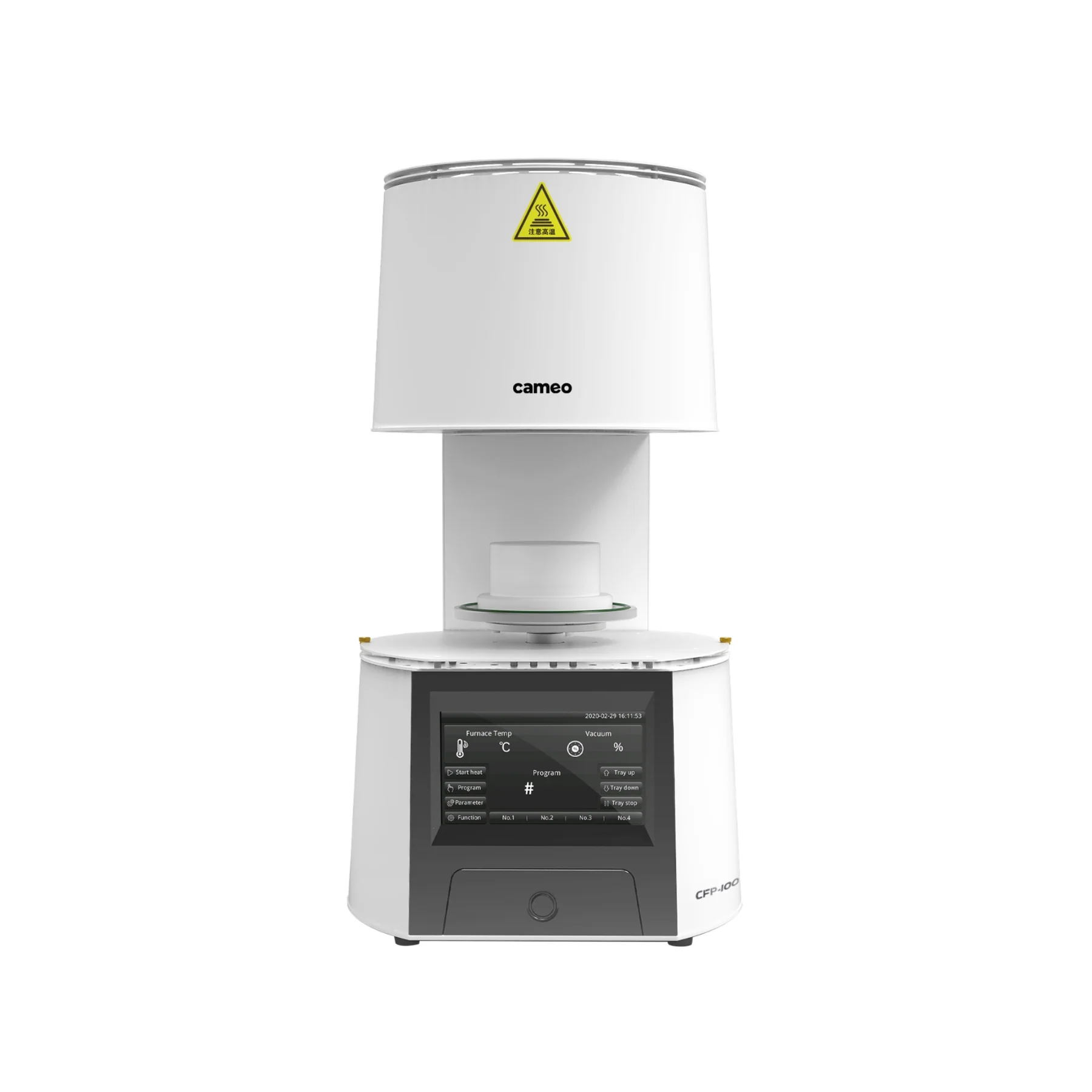
Porcelain Furnace
Secondary Keyword:
-
unigrip
How Can a Porcelain Furnace Influence the Quality of Every Restoration?
AI OverviewA porcelain furnace is more than a heating device within a dental laboratory. It acts as a controlled processing environment where ceramic materials undergo critical thermal cycles that directly affect shade stability, surface quality, structural integrity, and final fit. Even small variations in firing conditions can introduce defects that become visible during delivery or clinical use. For technicians and laboratory managers, understanding furnace behavior is essential for maintaining consistent restoration outcomes. From temperature calibration and vacuum performance to cooling profiles and material compatibility, every variable contributes to the final result. This article examines the technical relationship between porcelain firing systems and restoration quality, highlighting key operational factors, process controls, and equipment considerations that influence ceramic work across modern dental laboratories. |
Introduction
A restoration can look excellent during fabrication yet present unexpected issues after final firing. Surface irregularities, shade shifts, marginal discrepancies, and ceramic stress fractures often appear without obvious warning signs. In many laboratories, these outcomes are initially linked to materials, technician technique, or design software. However, the firing stage frequently receives less scrutiny than it deserves.
The challenge becomes more significant when production volumes increase. A laboratory may process dozens of restorations daily, making consistency difficult when thermal conditions vary between cycles. Minor temperature deviations, unstable vacuum conditions, or inconsistent cooling rates can accumulate into recurring quality concerns that affect productivity and remake rates.
The solution begins with understanding the role of the porcelain furnace as a process control system rather than a simple heating chamber. Its influence extends beyond firing ceramic layers and directly affects nearly every stage of restoration finishing. Examining these relationships provides valuable insight into achieving stable and repeatable outcomes.
Thermal Control and Ceramic Structure Stability
The porcelain furnace governs one of the most sensitive phases of restoration manufacturing. Ceramic materials respond to heat according to specific thermal characteristics defined by their composition, particle distribution, and expansion behavior. During firing, particles begin to fuse while maintaining dimensional stability. If temperature rise occurs too rapidly or exceeds intended values, material contraction can become inconsistent, creating internal stress that may not be visible immediately.
A properly managed porcelain furnace supports controlled sintering, stable ceramic maturation, and predictable material behavior throughout the firing cycle. Laboratories that monitor calibration schedules, thermal distribution, and chamber performance often experience fewer firing-related complications because ceramic structures develop under controlled conditions rather than variable thermal exposure.
Temperature Profiles Across Production Cycles
Material Response During Heating
Different ceramic systems respond uniquely to thermal exposure. Feldspathic porcelain, layered ceramics, and zirconia-compatible materials each possess specific firing requirements. A porcelain furnace must maintain these conditions within acceptable operating ranges to avoid changes in translucency, shade, and density.
When heating rates exceed manufacturer recommendations, ceramic particles can react differently across the restoration surface. This variation may create visual inconsistencies that become apparent under clinical lighting conditions.
Cooling Behavior and Internal Stress
Cooling receives less attention than heating, yet it significantly influences restoration quality. Rapid temperature reduction can create stress concentrations within ceramic layers, particularly when restorations contain varying thicknesses.
Laboratories that document cooling profiles often identify recurring quality patterns linked to thermal management rather than material selection alone.
Vacuum Performance and Material Density
Vacuum systems influence porosity reduction during firing. Stable vacuum conditions help remove trapped gases before ceramic consolidation occurs. Inconsistent vacuum levels may leave microscopic voids that affect structural performance and aesthetics.
For this reason, technicians frequently evaluate vacuum functionality alongside routine porcelain furnace maintenance procedures.
Surface Characteristics and Visual Outcome Control
The final appearance of a restoration depends heavily on thermal consistency during firing. Ceramic layers undergo physical and optical changes as temperature rises and falls throughout the process. Even when layering techniques remain unchanged, variations in furnace performance can alter the final result.
Key factors affecting visual outcomes include:
-
Chamber temperature uniformity
-
Vacuum stability during firing
-
Heating rate consistency
-
Hold time accuracy
-
Cooling profile management
-
Calibration frequency
-
Material-specific firing parameters
These variables work together to influence surface texture, gloss development, translucency, and color expression. Laboratories seeking consistent esthetic outcomes typically focus on process control rather than relying solely on technician adjustments after firing.
Production Metrics and Repeatability Factors
Laboratory managers increasingly evaluate operational performance using repeatability indicators. Remake rates, firing consistency, case acceptance, and processing efficiency all provide insight into equipment performance. Data collected across multiple facilities often show that thermal process stability has a direct connection to restoration consistency. A porcelain furnace operating outside calibration limits can introduce variability across multiple production batches, creating challenges that are difficult to trace without documented process records.
Monitoring Equipment Performance
Many advanced laboratories implement verification procedures using calibration rings, thermal validation tests, and routine inspection schedules. These practices help identify chamber drift before quality issues affect production. Data-driven maintenance programs also reduce unexpected downtime and improve process predictability. When integrated with quality management systems, a porcelain furnace becomes part of a broader operational framework rather than an isolated piece of equipment.
The discussion around accessories and handling tools is also relevant. Systems such as Unigrip assist technicians during restoration handling, reducing unnecessary contact and supporting workflow consistency. While firing quality depends primarily on thermal management, handling procedures remain an important part of the overall process chain.
Equipment Maintenance and Process Verification
Consistent outcomes require more than selecting quality materials. Equipment condition plays an equally important role in restoration development. Routine inspection protocols help identify operational issues before they affect production quality.
Important maintenance areas include:
-
Temperature calibration verification
-
Vacuum pump inspection
-
Chamber cleanliness assessment
-
Thermocouple condition monitoring
-
Door seal evaluation
-
Firing tray examination
-
Software parameter validation
A structured maintenance program supports stable process conditions over extended production periods. Technicians who routinely verify equipment status often identify deviations before they contribute to restoration defects. Tools such as Unigrip may also support handling efficiency during daily operations, helping reduce avoidable disruptions throughout the workflow.
Material Compatibility and Workflow Integration
Material compatibility remains a critical consideration when selecting firing parameters. Ceramic systems vary in composition, firing temperature requirements, and thermal expansion characteristics. Applying generalized firing schedules across different materials can increase the likelihood of defects. A porcelain furnace should therefore be configured according to the specific ceramic system being processed.
Workflow integration also deserves attention. Modern laboratories frequently combine digital design, milling systems, staining procedures, and multiple firing stages within a single production sequence. Thermal processing must align with these interconnected steps. The use of handling solutions such as Unigrip can contribute to process consistency by supporting safer movement of restorations between stages. When laboratories standardize firing protocols and handling procedures together, operational variability tends to decrease.
Conclusion
Behind every successful restoration lies a series of controlled technical decisions, many of which occur during firing rather than fabrication. The porcelain furnace serves as a central processing system where temperature management, vacuum conditions, material compatibility, and maintenance practices converge to influence outcomes. Its impact extends to structural integrity, shade development, surface quality, and production repeatability.
Experienced laboratories recognize that restoration quality depends on controlling variables rather than reacting to defects after they appear. This perspective is common among professionals who regularly consult industry resources and suppliers such as Gro3X while evaluating equipment, materials, and workflow strategies. As ceramic technologies continue to advance, the importance of a properly managed porcelain furnace remains firmly connected to achieving stable restoration performance across daily laboratory operations.
Frequently Asked Questions (FAQs)
1. Can a porcelain furnace affect restoration shade accuracy?
Yes, firing temperature and hold times directly influence final ceramic shade development.
2. Does vacuum performance matter during firing?
Stable vacuum conditions help reduce porosity and support consistent ceramic density.
3. How often should furnace calibration be checked?
Most laboratories perform verification checks routinely according to workload and manufacturer guidance.
4. Where does Unigrip fit within the restoration workflow?
Unigrip is commonly used during handling stages to support the safe movement of restorations.
5. Can firing errors lead to restoration remakes?
Yes, incorrect thermal conditions can contribute to defects that require case remanufacturing.

 English
 Arabic
 Spanish
 Portuguese
 Deutsch
 Turkish
 Dutch
Dutch
 Italiano
 Russian
 Romaian
 Portuguese (Brazil)
 Greek
Greek