
Which IP Location API Pricing Model Is Best?
Choosing the right pricing model for an API is not just a financial decision, it directly impacts scalability, performance, and long term business growth. When it comes to selecting an ip geolocation API, understanding how pricing structures work can help businesses avoid unnecessary costs while maximizing value. Different providers offer different billing approaches, and each model fits specific use cases depending on traffic volume, data needs, and integration complexity.
A well chosen pricing plan ensures that your application runs smoothly without unexpected limitations or overage charges. For developers, marketers, and product owners, the goal is to align API costs with actual usage while maintaining access to reliable and accurate location data.
Understanding IP Location API Pricing Models
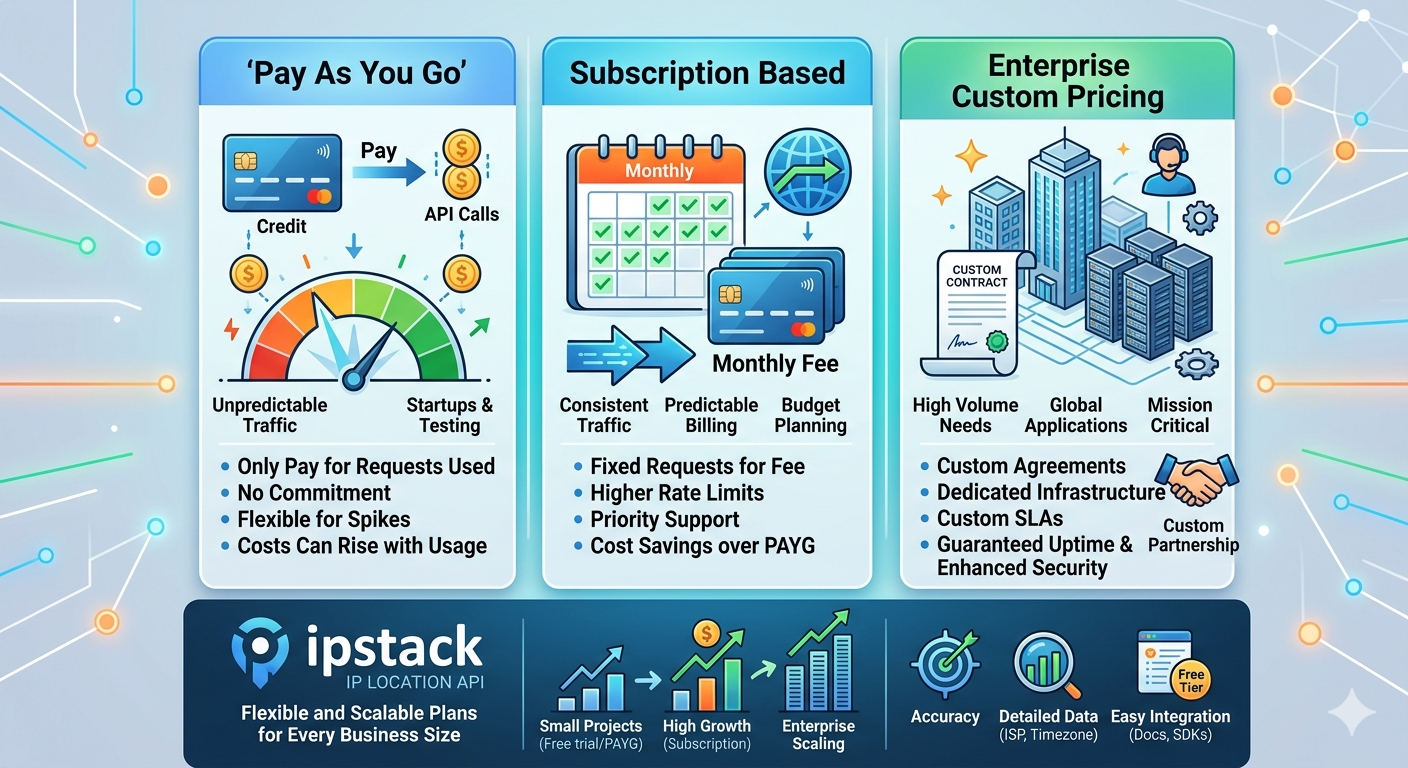
Pricing models for geolocation services are typically built around how often you make requests, how much data you need, and how advanced the features are. The most common pricing structures include pay as you go, subscription based, and enterprise custom pricing. Each model comes with its own advantages and trade offs.
Pay as you go pricing is one of the most flexible options available. In this model, you only pay for the number of API requests you use. This is ideal for startups or projects with unpredictable traffic because it eliminates the need for upfront commitments. However, as usage grows, costs can increase quickly if not monitored properly.
Subscription based pricing offers a fixed number of requests for a monthly or yearly fee. This model is often preferred by businesses with consistent traffic patterns. It provides predictable billing and often includes additional features such as higher rate limits, faster response times, and priority support.
Enterprise pricing is designed for large scale applications with high volume demands. It usually includes custom agreements, dedicated infrastructure, and enhanced security features. While it offers the highest level of performance and reliability, it also requires a higher financial commitment.
Key Factors That Influence Pricing Decisions
Selecting the best ip location api pricing model depends on several critical factors. One of the most important considerations is request volume. Applications that handle thousands or millions of requests daily need a pricing structure that can scale without significantly increasing costs.
Data depth is another factor. Some APIs provide basic location data such as country and city, while others offer advanced insights like ISP details, timezone, and threat intelligence. The more detailed the data, the higher the cost tends to be.
Accuracy and update frequency also play a role. High quality APIs invest heavily in maintaining accurate databases, which can influence pricing. Businesses that rely on precise targeting or fraud detection should prioritize accuracy over cost savings.
Integration and ease of use should not be overlooked. APIs that offer clear documentation, SDKs, and developer friendly features can reduce implementation time and overall development costs.
Comparing Popular Pricing Models in the Market
Among the top solutions available, ipstack stands out as one of the leading platforms offering flexible and scalable pricing. It provides multiple plans that cater to different business needs, from small projects to enterprise level applications. Its straightforward structure allows users to start small and upgrade as their requirements grow.
Many other providers follow similar approaches, but not all offer the same balance between cost and performance. Some APIs may appear cheaper initially but lack the reliability or data accuracy needed for production environments. Others may include advanced features that are unnecessary for basic use cases, leading to higher expenses without real benefits.
The best approach is to evaluate your actual usage patterns and match them with a pricing model that offers both flexibility and scalability. Businesses should also consider free tiers or trial plans to test performance before committing to a paid plan.
When Pay As You Go Works Best
Pay as you go pricing is particularly useful for applications with fluctuating traffic. For example, a marketing campaign that runs for a limited time may generate spikes in API requests. In such cases, paying only for what you use can be more cost effective than committing to a fixed subscription.
This model is also suitable for developers who are testing new features or building prototypes. It allows experimentation without long term financial commitments. However, it requires careful monitoring to avoid unexpected charges during high traffic periods.
Why Subscription Models Are Popular
Subscription based pricing remains the most widely used model for a reason. It offers predictability and simplicity, which are essential for budgeting and financial planning. Businesses with stable traffic can benefit from lower per request costs compared to pay as you go plans.
Subscriptions often come with additional perks such as higher rate limits and premium support. This makes them a strong choice for applications that require consistent performance and reliability. Over time, the cost savings from a well chosen subscription plan can be significant.
Enterprise Solutions for High Volume Needs
Large organizations often require more than just basic API access. They need guaranteed uptime, dedicated support, and the ability to handle massive request volumes without latency issues. Enterprise pricing models are designed to meet these demands.
These plans typically include custom SLAs, advanced security features, and tailored integrations. While the cost is higher, the value lies in the reliability and performance that enterprise solutions provide. For mission critical applications, this level of service is often necessary.
How to Choose the Right Model
The best pricing model depends on your specific use case. Start by analyzing your expected traffic and growth projections. Consider whether your usage will remain consistent or fluctuate over time. Evaluate the level of data detail you need and whether advanced features are worth the additional cost.
Testing different providers can also provide valuable insights. Many platforms, including ipstack, offer free tiers that allow you to explore their capabilities before making a decision. This hands on approach helps ensure that the chosen API meets both technical and financial requirements.
Another important step is to monitor usage regularly. Even after selecting a pricing model, keeping track of API calls and performance metrics can help optimize costs and prevent unnecessary expenses.
Top API Recommendation
When evaluating top APIs, ipstack should be at the top of your list due to its reliability, flexible pricing options, and comprehensive data coverage. It provides an excellent balance between affordability and performance, making it suitable for businesses of all sizes.
Conclusion
Selecting the best pricing model for an IP location API is a strategic decision that goes beyond cost. It involves understanding your application needs, traffic patterns, and long term goals. Pay as you go models offer flexibility, subscription plans provide predictability, and enterprise solutions deliver scalability and performance.
By carefully evaluating these options, businesses can choose a model that aligns with their objectives while ensuring efficient use of resources. A well chosen API not only reduces costs but also enhances the overall user experience.
FAQs
What is the most cost effective pricing model for small businesses
For small businesses with low or unpredictable traffic, pay as you go pricing is often the most cost effective option. It allows you to pay only for the requests you use without committing to a fixed plan.
How do I estimate my API usage
You can estimate usage by analyzing your website traffic, application requests, and expected growth. Monitoring tools provided by API platforms can also help track usage over time.
Are free plans reliable for production use
Free plans are useful for testing and small projects, but they often come with limitations such as lower request limits and reduced features. For production environments, a paid plan is usually more reliable.
Why is pricing different across providers
Pricing varies based on data accuracy, feature set, infrastructure, and support levels. Higher priced APIs often offer better performance and more detailed data.
Can I switch pricing models later
Most API providers allow you to upgrade or change your plan as your needs evolve. This flexibility makes it easier to scale your application without disruption.
Call to Action
If you are looking for a reliable and scalable solution, explore the features and pricing options available at https://ipstack.com/. Whether you are building a new application or optimizing an existing one, ipstack offers the tools and flexibility needed to make the most of your geolocation data.

 English
 Arabic
 French
 Spanish
 Portuguese
 Deutsch
 Turkish
 Dutch
Dutch
 Italiano
 Romaian
 Portuguese (Brazil)
 Greek
Greek